
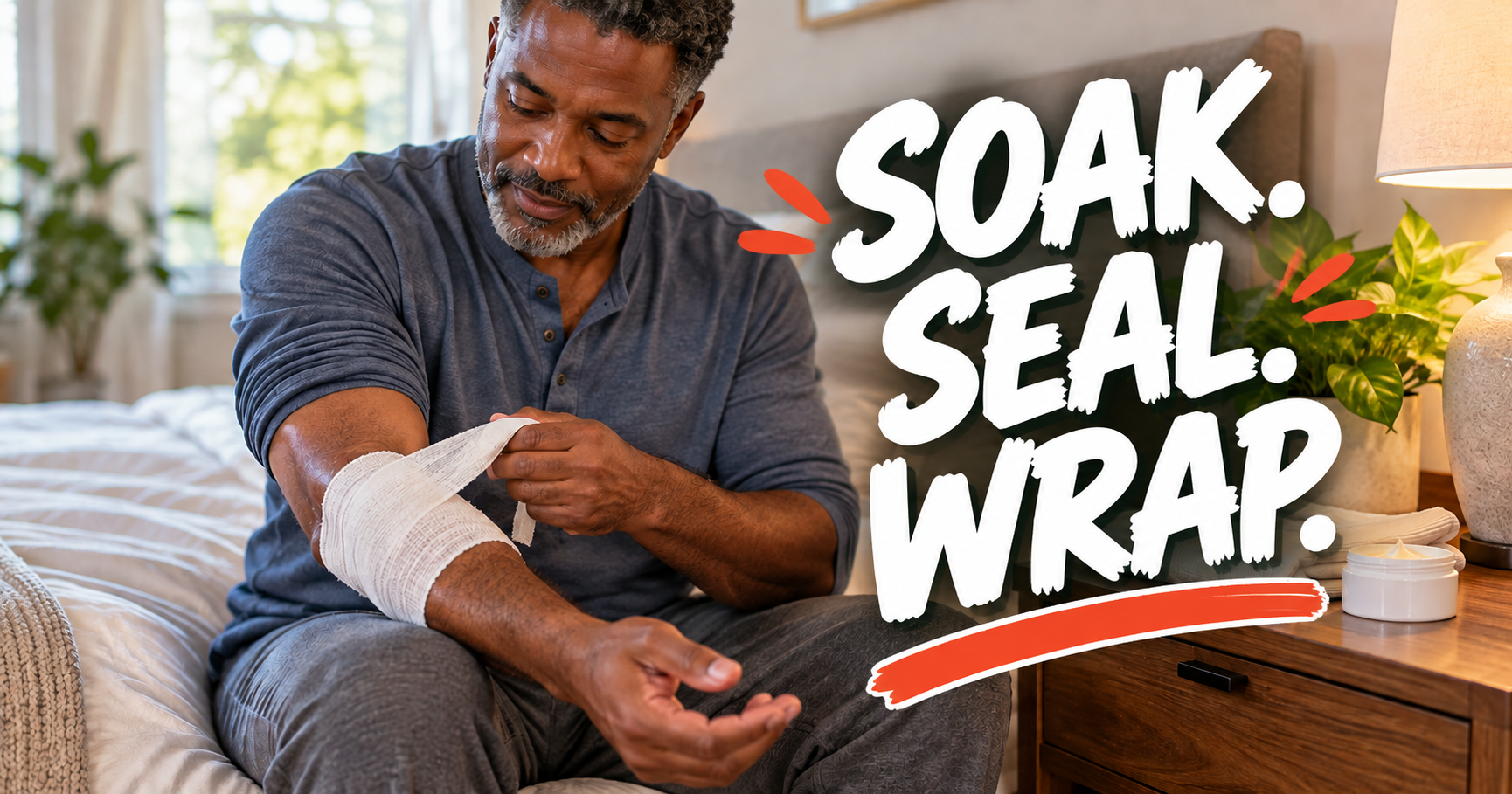
Wet wrap therapy for eczema sounds odd at first. You put damp cloth on your skin, then cover it with dry cloth. But doctors have used it for years to calm severe flares, and it can bring real relief when your skin is raw, hot, and itchy. Here’s how it works, who it’s for, and how to do it without getting chilled.
What Is Wet Wrap Therapy?
It’s a short-term treatment for bad flares. You moisturize your skin, cover it with a layer of damp cloth, and then add a dry layer on top.
The damp layer cools the skin and holds moisture in. The dry layer keeps it snug and helps stop scratching. The National Eczema Association describes it as a way to rehydrate skin and help your treatments work better.
Who Is It For?
Wet wraps are usually used for moderate to severe flares, when the itch or pain is hard to manage. They’re not meant for everyday use.
Talk to your doctor first. This matters for a few reasons:
- Wet wraps can make medicated creams absorb more strongly, so your doctor should tell you which products to use underneath.
- They’re not a good idea over skin that looks infected.
- Your doctor can tell you how often to wrap and for how long.
What You Need
| Supplies | What It’s For |
|---|---|
| Lukewarm bath or shower | Soaks the skin before wrapping |
| Fragrance-free moisturizer | Seals water in |
| Clean cotton gauze, soft cotton clothing, or tubular bandages | The damp layer |
| Dry cotton pajamas, gloves, or socks | The dry layer on top |
| Warm water | Wets the inner layer |
How to Do Wet Wrap Therapy, Step by Step
- Soak first. Take a lukewarm bath or shower for about 10 to 15 minutes. Skip hot water.
- Pat dry gently. Leave your skin slightly damp.
- Apply your treatment. Use any medicine your doctor prescribed on the flared areas, then add a thick layer of moisturizer.
- Dampen the inner layer. Soak your gauze or cotton clothing in warm water and wring it out until it’s damp, not dripping.
- Wrap the area. Cover the flared skin loosely. It shouldn’t be tight.
- Add the dry layer. Put dry cotton clothing or a dry wrap over the damp one.
- Leave it on. Many people wrap for a couple of hours. Some do it overnight if their doctor agrees. Check now and then that the inner layer is still damp.
- Finish up. Take the wraps off and moisturize again.
For Hands and Feet
You don’t have to wrap your whole body. For hands, use damp cotton gloves under dry ones. For feet, use damp cotton socks under dry socks. Wrapping just the worst areas is often easier to stick with.
How to Avoid Getting Chilled
Damp cloth can feel cold, especially at night. These tips help:
- Use warm water, not cold, for the wet layer
- Wring the cloth out well so it’s only damp
- Wrap in a warm room
- Add a blanket or an extra dry layer on top if you feel cold
- Take the wraps off if you start to shiver
Where Your Moisturizer Fits In
The moisturizer you put under the wrap matters. Choose something simple and fragrance-free. A good option is Dermasolve Eczema Cream, which is made with colloidal oatmeal. Check with your doctor about which products to use under wraps, especially if you’re also using a prescription.
How Long Should You Do It?
Wet wraps are meant for short stretches. Many sources suggest a few nights up to about one to two weeks. Using them too long or too often can raise the risk of skin problems, including infection. If you keep needing them, it’s time to talk to your doctor about the overall treatment plan.
When to See a Doctor Right Away
- Your skin is oozing, crusting, or has honey-colored scabs
- You have a fever, or the rash is painful, warm, or swelling
- Skin is breaking down under the wraps
- Wraps don’t help after several days
Wet wraps won’t cure eczema, but when a flare gets out of hand, they can be a welcome reset. Pair them with your normal skincare routine and an occasional bath once things calm down.
Mike Marenick is the founder of HealFast Skincare and holds the patent for his invention, Ovasome Technology, used in skincare formulations. He began developing skincare products after watching his mother manage psoriasis for decades, and has spent over twenty years formulating treatments for chronic skin conditions. His work has been featured on Home Shopping Network, in two national infomercials, and in more than 300 publications including Vogue, Newsweek, and Allure. He is not a medical doctor — always consult a dermatologist for diagnosis and treatment of skin conditions.
This post contains affiliate links. As an Amazon Associate, I earn from qualifying purchases.
Leave a Reply