
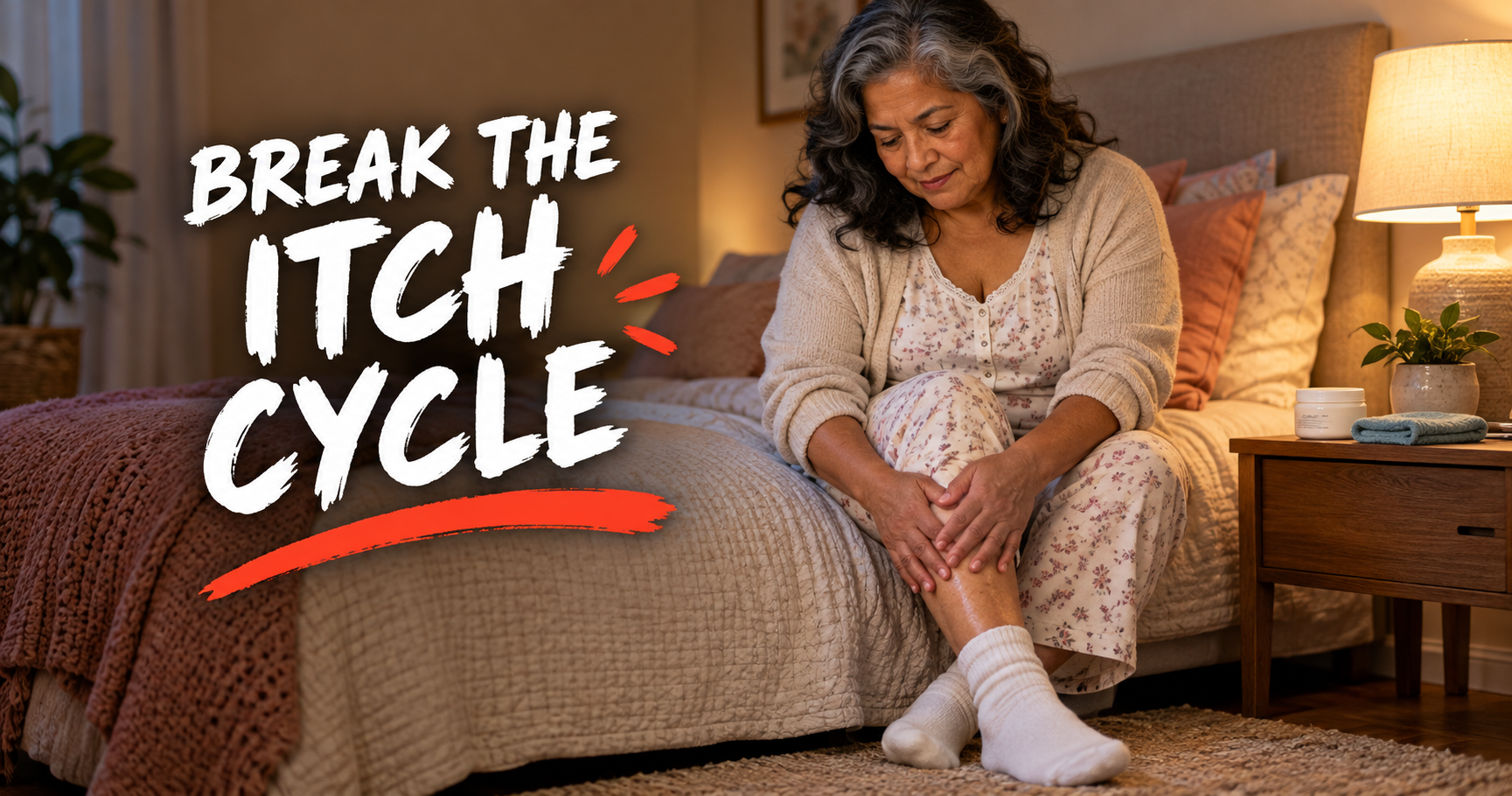
Have you got thick, leathery skin from scratching a spot that won’t stop itching? It could be a skin problem called lichen simplex chronicus, also known as neurodermatitis. It starts with an itch, grows with scratching, and often shows up in people who already have eczema. Here’s what it is, why it happens, and how to break the cycle.
What Is Lichen Simplex Chronicus?
Lichen simplex chronicus (LSC) is thickened, leathery skin caused by repeated scratching or rubbing. It starts with an itch. You scratch. Scratching irritates the skin and makes it itch more. So you scratch more. Over time the skin thickens in response. Doctors call this the itch-scratch cycle.
It isn’t contagious, and it isn’t dangerous. But it can be maddening, and it won’t clear up unless the cycle is broken.
What Does It Look Like?
- A thick, rough, leathery patch of skin
- Deep skin lines that look exaggerated
- Dry, scaly, or bumpy texture
- Skin that may look red, brown, or darker than the surrounding skin
- Scratch marks, broken skin, or scarring
- Itching that may be worse at night or when you’re stressed
It usually shows up as one or a few well-defined patches. Common spots include the ankles, wrists, forearms, the back of the neck, and the lower legs. It can also happen in more private areas, which is a good reason to see a doctor.
What Causes It?
Doctors don’t fully understand why some people get LSC. It often starts with a trigger that makes skin itchy, such as:
- Eczema or other dry, irritated skin
- Insect bites
- Heat and sweat
- Tight or scratchy clothing
- Stress or tension. For some people, itching gets worse when they’re anxious or tired.
Some people also seem to have more sensitive nerves that react more strongly to itch. For others, no clear cause is found.
Is It the Same as Eczema?
No, but the two are linked. Eczema can start the itch-scratch cycle, and LSC can develop on top of eczema. LSC patches are thicker and more leathery than typical eczema, and they’re usually limited to one or a few spots. For an overview of eczema types, see our guide to atopic, contact, and dyshidrotic eczema.
How to Break the Itch-Scratch Cycle
This is the heart of treatment. Here are some practical steps:
1. Keep the skin moisturized
Dry skin itches more. Apply a thick, fragrance-free cream often, especially after washing. Dermasolve Eczema Cream is made with colloidal oatmeal and is a good fit for a daily habit.
2. Calm the itch without scratching
- Apply a cool, damp cloth for 10 to 15 minutes
- Tap or press on the itchy spot instead of scratching
- Keep a cool pack handy for flare-ups
3. Protect the patch
- Keep your nails short and smooth
- Cover the patch with a bandage or loose clothing, especially at night
- Wear soft cotton gloves or socks to bed
- Choose soft, breathable fabrics
4. Find your triggers
Notice when the itching peaks. Is it stress? Heat? A certain fabric? A bedtime habit? Many people scratch without realizing it.
5. Manage stress and sleep
Itch often rises when you’re tired or tense. Relaxation, regular sleep, and physical activity can all help.
What a Doctor Can Do
Home care helps, but thick, established patches usually need medical treatment. A doctor may recommend:
- Prescription-strength topical steroids to calm inflammation and soften thick skin
- Treatment for any underlying eczema or other skin condition
- Medicines to reduce itching, especially at night
- Strategies to help you stop scratching, including behavioral approaches
Treatment takes time. The skin took a while to thicken, and it takes a while to return to normal.
Quick Do’s and Don’ts
| Do | Don’t |
|---|---|
| Moisturize several times a day | Scratch, rub, or pick |
| Use cool compresses for itch | Use hot water |
| Keep nails short | Wear rough or tight clothing on the patch |
| Cover the area at night | Ignore stress and sleep problems |
| Ask a doctor about prescription options | Use strong products on broken skin |
When to See a Doctor
- A patch of thick, leathery skin hasn’t improved in a couple of weeks
- The skin is broken, bleeding, or looks infected
- Itching disrupts your sleep
- The patch is in a sensitive area
- You’re not sure whether it’s LSC, eczema, or something else
It’s hard to stop scratching when something itches this much. But with the right care, the cycle can be broken and the skin can recover.
Mike Marenick is the founder of HealFast Skincare and holds the patent for his invention, Ovasome Technology, used in skincare formulations. He began developing skincare products after watching his mother manage psoriasis for decades, and has spent over twenty years formulating treatments for chronic skin conditions. His work has been featured on Home Shopping Network, in two national infomercials, and in more than 300 publications including Vogue, Newsweek, and Allure. He is not a medical doctor — always consult a dermatologist for diagnosis and treatment of skin conditions.
This post contains affiliate links. As an Amazon Associate, I earn from qualifying purchases.
Leave a Reply