

Psoriasis isn’t just one thing — there are several different types of psoriasis, each with its own look, its own triggers, and sometimes its own treatment approach. Knowing which type you’re dealing with matters, because what works for one type doesn’t always work for another.
Here’s a plain-language breakdown of each type, from most common to rarest.
Plaque Psoriasis (The Most Common Type)
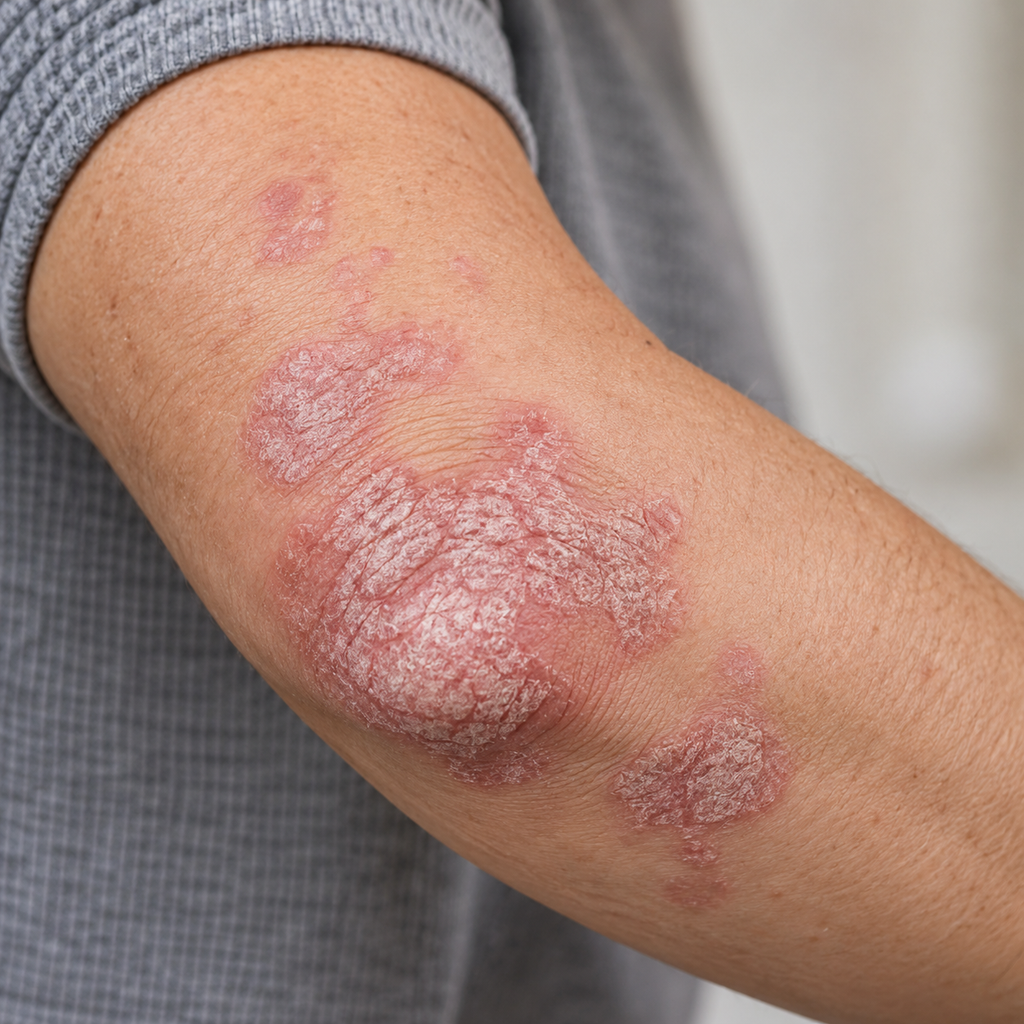
Plaque psoriasis is what most people picture when they think of psoriasis. It affects up to 80-90% of people who have the condition, making it by far the most common type.
It shows up as raised, red patches covered in a silvery-white scale. These patches, called plaques, can appear anywhere but most often show up on the elbows, knees, scalp, and lower back. They can itch, burn, or feel tight, and scratching them can make things worse.
If you want to understand what’s actually driving this process at the immune-system level, we cover that in detail here.
Guttate Psoriasis (Small, Drop-Shaped Spots)
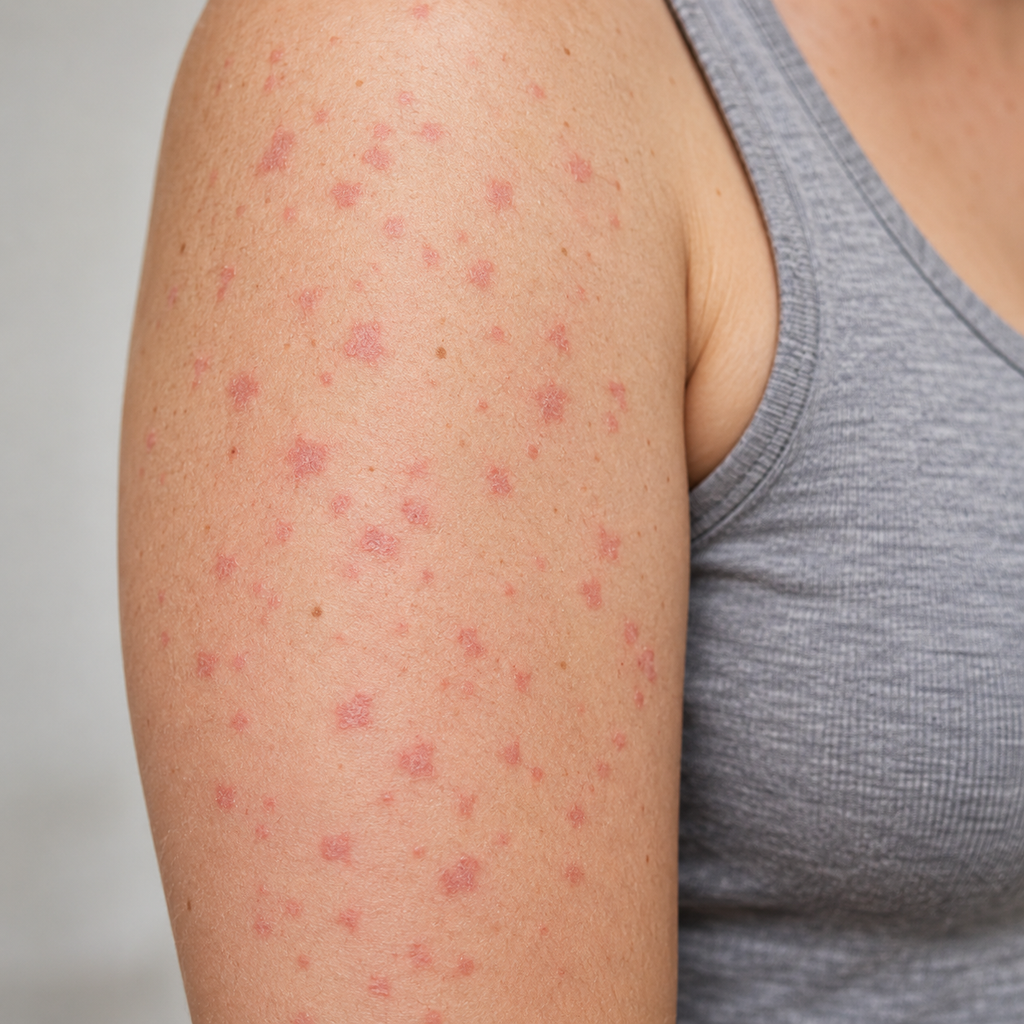
Guttate psoriasis looks completely different from plaque psoriasis. Instead of thick raised patches, it shows up as many small, round spots, usually scattered across the torso, arms, and legs. The name comes from the Latin word for “drop,” which is exactly what the spots look like.
This type often shows up suddenly, and it’s strongly linked to infections, especially strep throat. It’s most common in children and young adults. The good news: guttate psoriasis often clears up on its own within a few weeks to months. The less good news: it can come back, and in some people, it eventually develops into plaque psoriasis.
Inverse Psoriasis (In the Skin Folds)
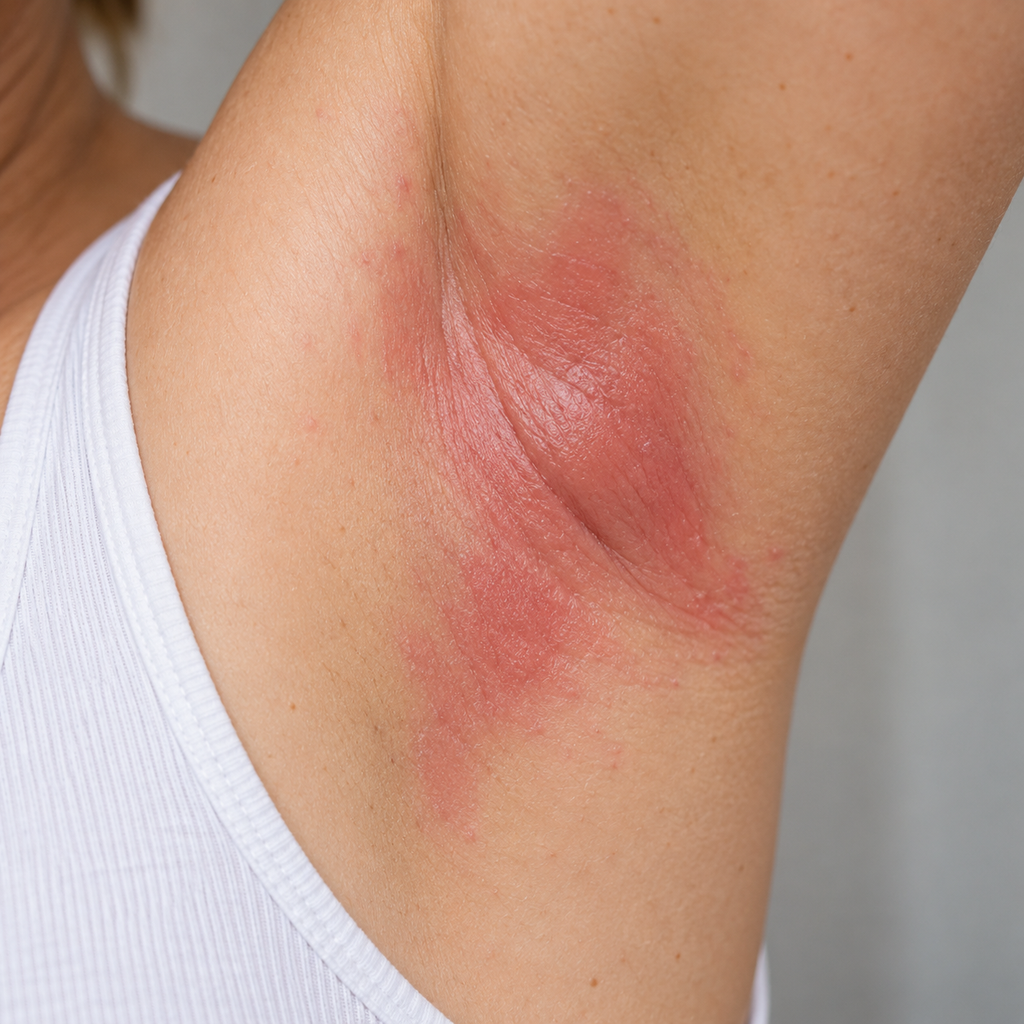
Inverse psoriasis shows up somewhere different: skin folds, like underarms, under the breasts, the groin, and the buttocks.
It looks different too. Instead of the thick, scaly patches of plaque psoriasis, inverse psoriasis appears as smooth, shiny, very red patches, without much visible scale. That’s because the moisture and friction in skin folds wears the scale away. Sweat and rubbing in these areas can make it worse, which makes this type especially uncomfortable. It often shows up alongside another type of psoriasis rather than on its own.
Pustular Psoriasis (Blisters, Not Plaques)
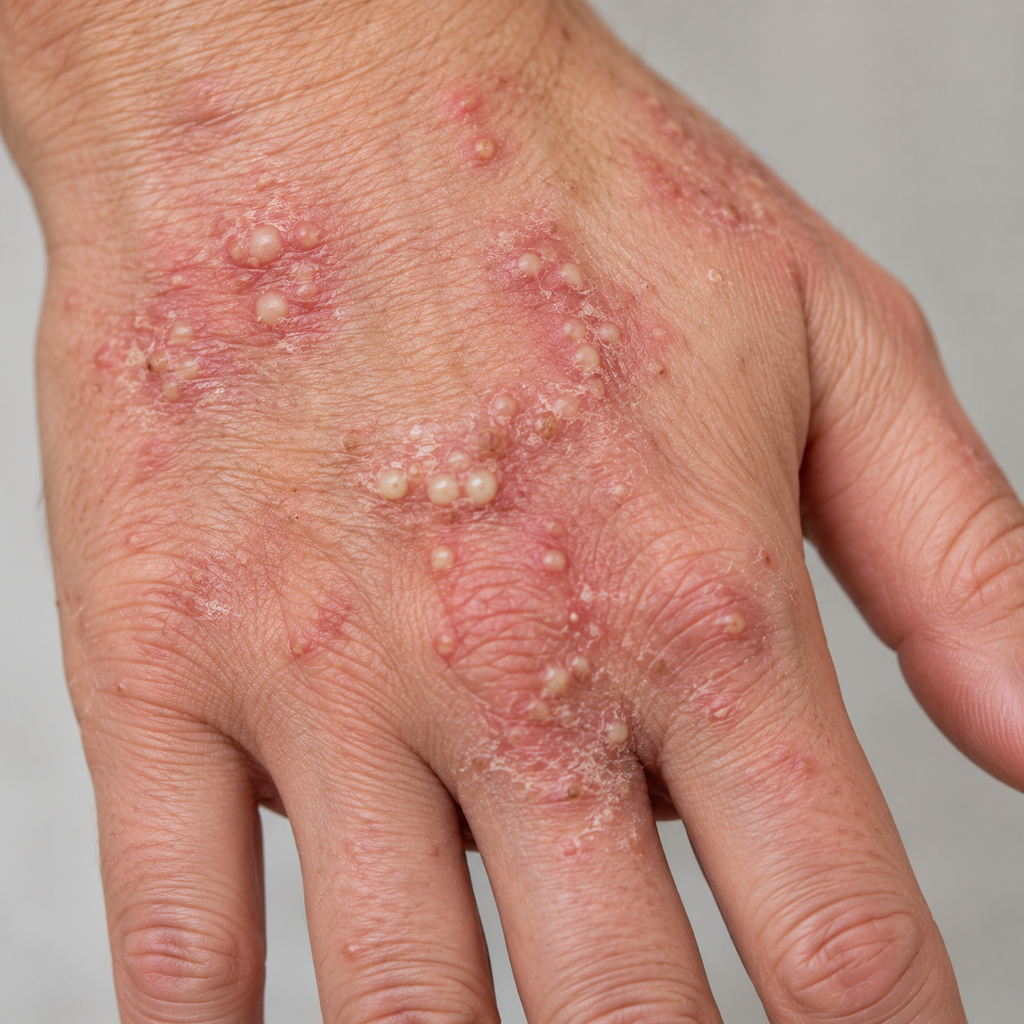
Pustular psoriasis is rarer and looks noticeably different: small, white or yellow blisters filled with fluid, surrounded by red, inflamed skin. The fluid isn’t infectious, even though it looks like it might be.
This type can be triggered by certain medications, an infection, pregnancy, or by stopping a corticosteroid medication too abruptly. It mainly affects adults, and depending on how widespread it is, it can be limited to one area (like the hands and feet) or spread across the body. Widespread pustular psoriasis is considered a medical emergency and needs prompt care.
Erythrodermic Psoriasis (Rare and Serious)
Erythrodermic psoriasis is the rarest type, affecting only about 2% of people with psoriasis. It’s also the most serious.
It causes intense redness across most of the body, along with skin shedding in large sheets rather than small flakes. It can come with a rapid heart rate, temperature changes, and dehydration, and it’s considered a medical emergency. It’s often triggered by severe, uncontrolled plaque psoriasis, a bad sunburn, an infection, or abruptly stopping certain medications. If you or someone you know develops these symptoms, seek medical care immediately rather than waiting it out.
Scalp Psoriasis (A Location, Not Just a Type)
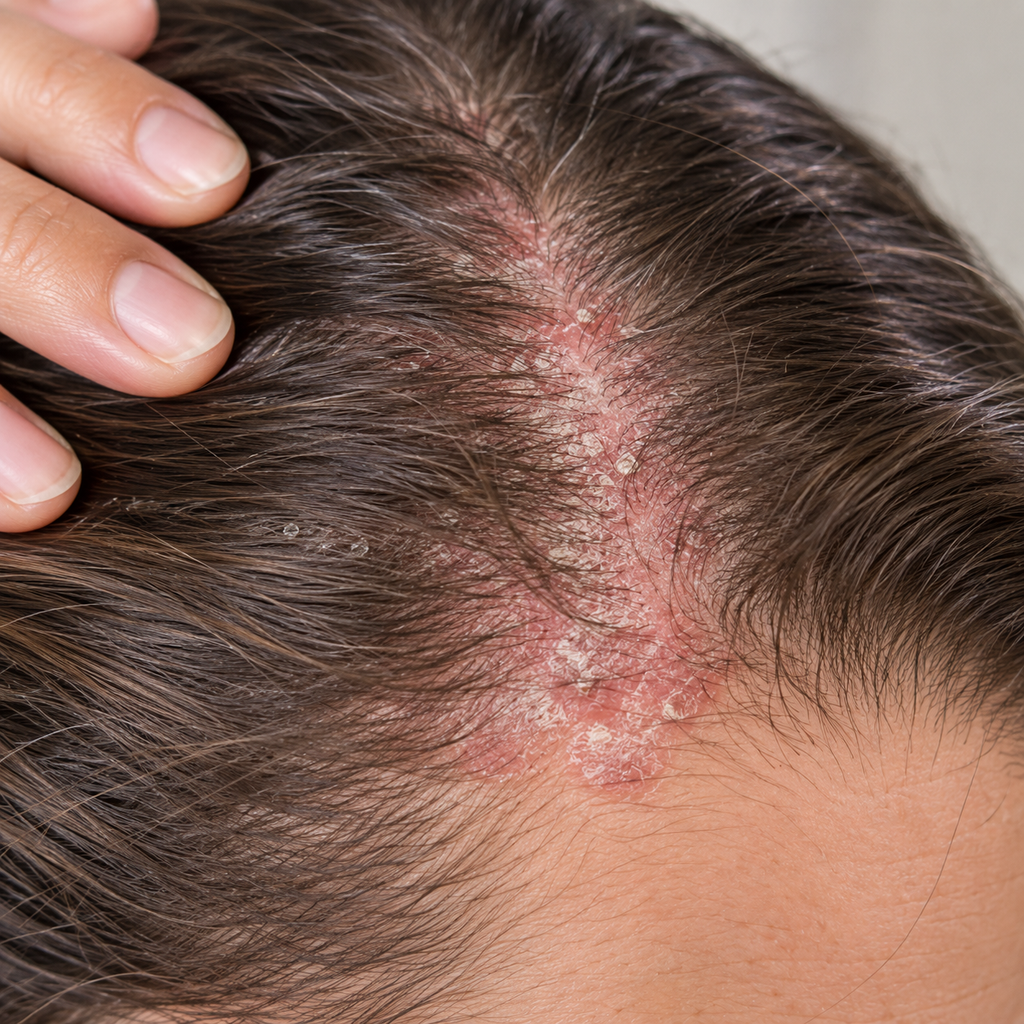
Scalp psoriasis isn’t a separate biological type so much as plaque psoriasis showing up specifically on the scalp, though it’s common enough and different enough in day-to-day management that it’s usually talked about on its own. It can extend past the hairline onto the forehead, neck, or behind the ears, and the scale can be mistaken for severe dandruff.
Because hair care and scalp psoriasis treatment interact in ways skin-only psoriasis doesn’t, we’ve written a full breakdown of that specifically: Why a Psoriasis Shampoo Alone Often Isn’t Enough for Scalp Psoriasis.
Nail Psoriasis
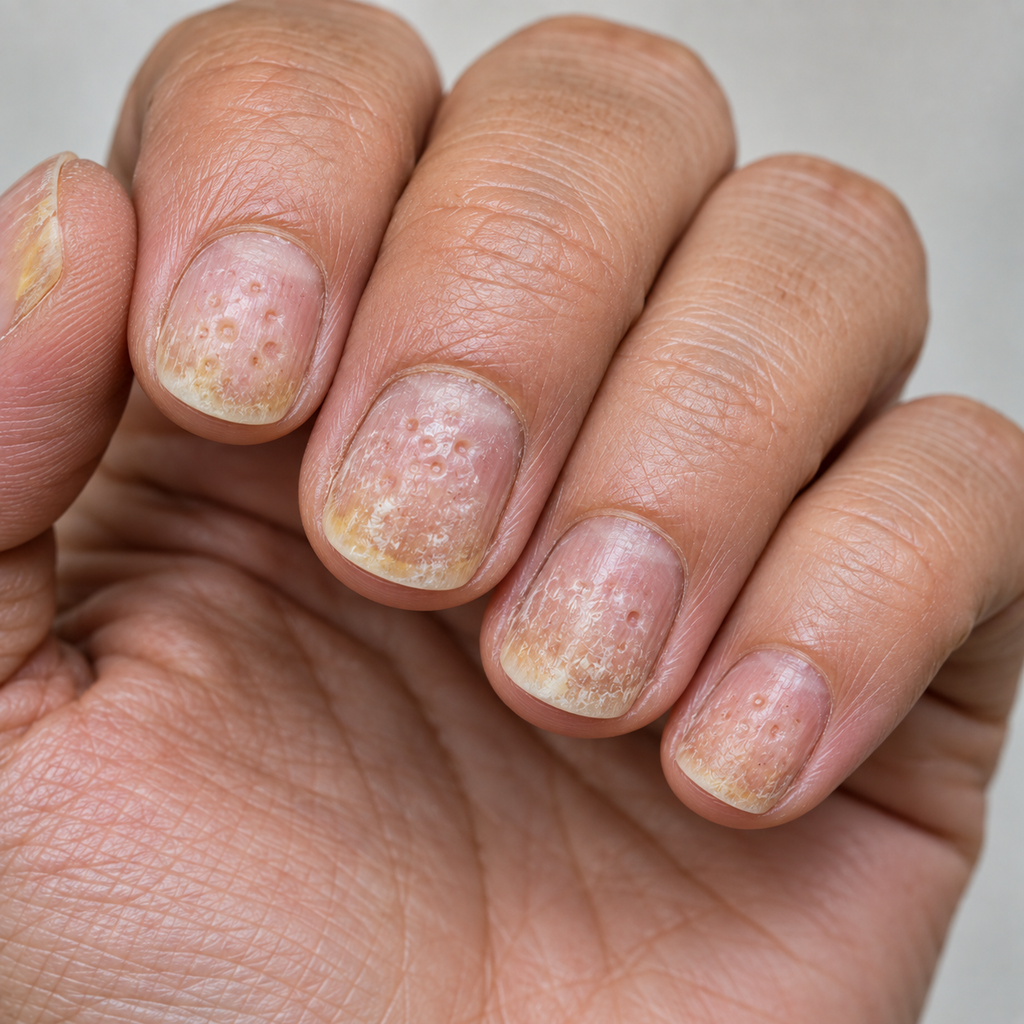
Psoriasis can affect fingernails and toenails too, not just skin. It shows up as small pits or dents in the nail surface, discoloration (nails may look white, yellow, or brown), a chalky buildup underneath the nail, or the nail separating from the nail bed.
Nail psoriasis is worth paying attention to beyond cosmetic concerns: it’s associated with psoriatic arthritis, so if you notice these changes, it’s worth mentioning to your dermatologist even if your skin symptoms seem mild.
Can You Have More Than One Type at Once?
Yes. Psoriasis can change from one type to another over time, and some people have more than one type at the same time. There’s no way to predict who will develop a second type, but there are some known patterns: severe, uncontrolled plaque psoriasis can trigger erythrodermic psoriasis, suddenly stopping a corticosteroid can bring on pustular psoriasis, a strep infection can lead to guttate psoriasis, and weight gain can trigger inverse psoriasis in the body’s high-friction areas.
If you notice a new patch that doesn’t look like your usual psoriasis, it’s worth getting it checked rather than assuming it’s more of the same.
When to See a Dermatologist
- You’re not sure which type of psoriasis you have, or whether it’s psoriasis at all
- Symptoms are spreading quickly or covering a large area of your body
- You notice nail changes, which can be linked to psoriatic arthritis
- You develop widespread redness, blistering, or feel unwell along with a flare — these can be signs of the more serious types and need prompt medical attention
A proper diagnosis matters, since different types of psoriasis are sometimes treated differently.
Mike Marenick is the founder of HealFast Skincare and holds the patent for his invention, Ovasome Technology, used in skincare formulations. He began developing skincare products after watching his mother manage psoriasis for decades, and has spent over twenty years formulating treatments for chronic skin conditions. His work has been featured on Home Shopping Network, in two national infomercials, and in more than 300 publications including Vogue, Newsweek, and Allure. He is not a medical doctor — always consult a dermatologist for diagnosis and treatment of skin conditions.
As an Amazon Associate, Itch and Flare earns from qualifying purchases.