
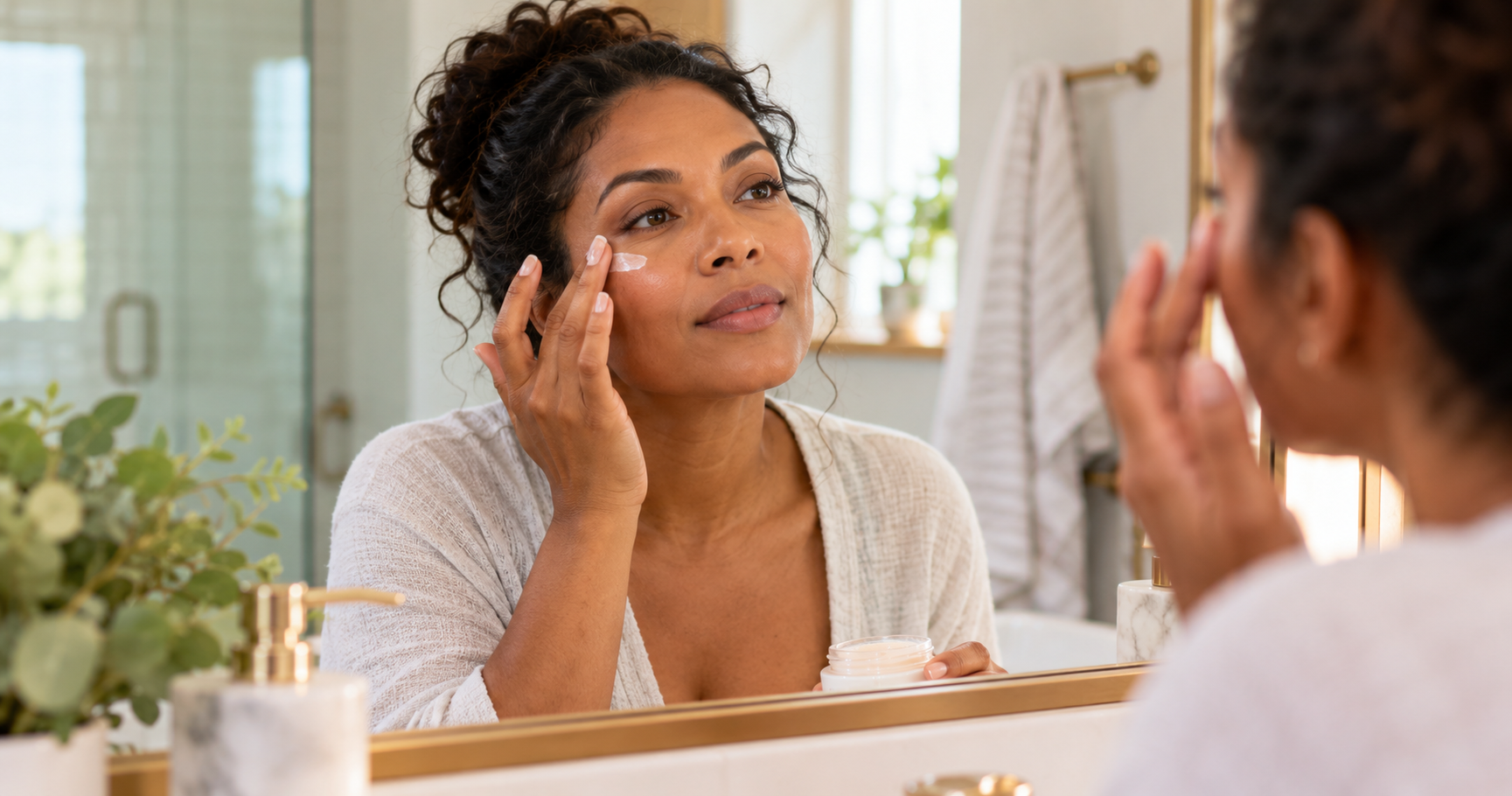
Finding a good non-greasy moisturizer for eyelid eczema is trickier than grabbing any eye cream off the shelf, and there’s a real reason for that. Eyelid skin plays by different rules than the rest of your face, and a thick, heavy formula that works great on your arms can actually cause its own problems right here.
Why Eyelid Skin Plays by Different Rules
Eyelid skin is the thinnest skin on your entire body, which means it’s more reactive and absorbs whatever you put on it more readily than skin almost anywhere else. That matters for both irritants and treatments: something that would be perfectly fine on your cheek or your arm can genuinely bother your eyelid, and medications applied here reach deeper, faster.
Don’t Trust “Hypoallergenic” or “Ophthalmologist-Tested” Labels
Two label claims are worth being skeptical of here, same as we’ve covered in how to read a skincare label. “Hypoallergenic” has no legal definition at all, so any product can claim it regardless of what’s actually inside. “Ophthalmologist-tested” sounds reassuring, but it usually just means the product was checked for comfort in people with healthy eyes, not specifically tested for safety on skin that’s already dealing with eczema. Neither claim tells you much on its own.
The Sneaky Culprit: It’s Often Not Even an Eye Product
Here’s a genuinely surprising fact from patch testing research: nail polish is one of the single most common allergens found in people with eyelid eczema. It’s not applied to the eyelid on purpose; it gets there because everyone unconsciously rubs or touches their eyes throughout the day, and whatever’s on your fingertips comes along for the ride.
A few other things that reach your eyelids indirectly, without ever being applied there directly:
- Shampoo and hair dye, even if your scalp itself seems unaffected
- Facial moisturizer and sunscreen from elsewhere on your face
- Perfume, which can act as an airborne irritant
- Household cleaners, carried on your hands
What to Look For on the Label
Since the labels themselves aren’t reliable guides, look at the actual ingredients instead. Ceramides, glycerin, and hyaluronic acid are generally good signs, since they support the skin barrier without adding much irritation risk. Dermasolve’s Eczema Cream is built around colloidal oatmeal and naturally sourced hyaluronic acid, a combination that fits this profile well for the skin around the eye area. Fragrance-free is non-negotiable here. It’s also worth looking specifically for “MCI/MI free” on the label, meaning the product skips methylisothiazolinone and methylchloroisothiazolinone, two preservatives that show up often in patch testing for this exact area.
A quick note on where to apply it: keep any product, including this one, just off the lash margin itself rather than right at the eye’s edge, and patch test on a small area first given how reactive eyelid skin can be.
Why Thick, Greasy Ointments Aren’t Actually Ideal Here
This is the part that trips people up. Thick petroleum-based ointments are often a great, gentle choice elsewhere on the body, but right at the eyelid margin, they can migrate into the eye itself and blur your vision. That’s really the core reason a lighter, non-greasy formula is specifically preferred here, not because thicker products are unsafe, just because of where this particular skin sits.
If a Steroid Is Prescribed
Given how thin and absorbent this skin is, any steroid prescribed for eyelid eczema is usually a mild one, used for a limited time. It’s also worth making sure it’s in a genuinely hypoallergenic base that skips numbing additives like diphenhydramine or benzocaine, since those ingredients are themselves recognized allergens and can end up causing the exact problem they’re meant to soothe.
Give Changes Time to Work
If you’re trying to identify and remove a specific allergen, patience matters. It can take up to eight weeks of consistently avoiding a suspected trigger before you see the full improvement, so don’t give up on a change after just a few days.
When to See a Dermatologist or Allergist
- You’ve switched products and it’s not improving after several weeks
- You suspect a specific allergen but aren’t sure what it is
- The eczema is severe, painful, or affecting your vision
- You want formal patch testing to pin down your actual trigger
Eyelid eczema takes a bit more care to manage than eczema almost anywhere else, but once you know what’s actually worth paying attention to, it gets a lot more manageable.
Mike Marenick is the founder of HealFast Skincare and holds the patent for his invention, Ovasome Technology, used in skincare formulations. He began developing skincare products after watching his mother manage psoriasis for decades, and has spent over twenty years formulating treatments for chronic skin conditions. His work has been featured on Home Shopping Network, in two national infomercials, and in more than 300 publications including Vogue, Newsweek, and Allure. He is not a medical doctor — always consult a dermatologist for diagnosis and treatment of skin conditions.
As an Amazon Associate, Itch and Flare earns from qualifying purchases.
Leave a Reply