
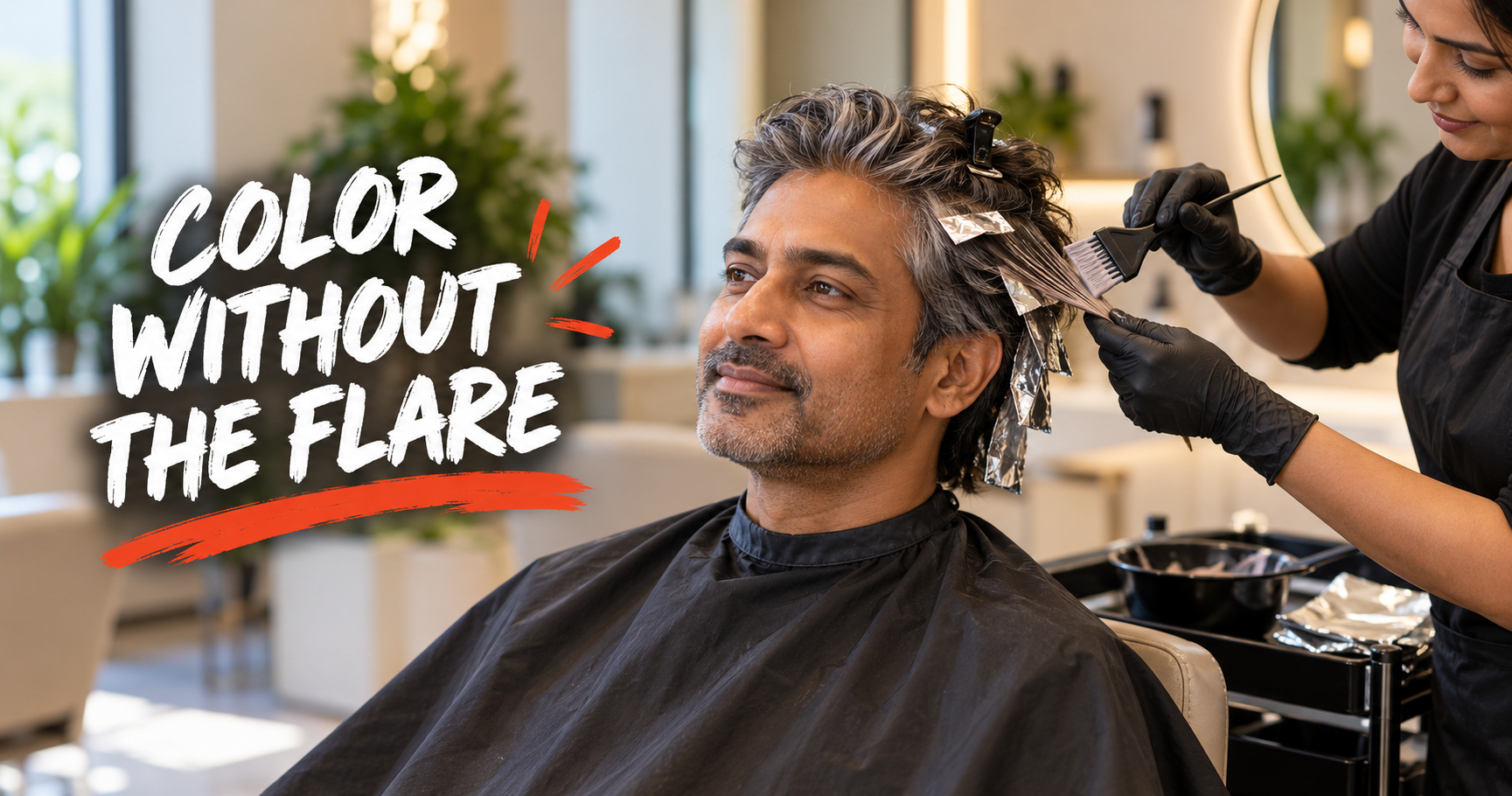
Love your hair color but worried about your scalp? Hair dye and scalp eczema don’t always get along. The skin on your scalp is already sensitive, and many dyes contain chemicals that can irritate it or cause an allergic reaction. The good news is that you can often color your hair with fewer problems if you plan ahead. Here’s how.
Why Hair Dye Can Be a Problem
Hair dye can cause trouble in two ways:
- Irritation. Ingredients like ammonia and peroxide can sting and dry out already-sensitive skin.
- Allergy. Many permanent dyes contain a chemical called PPD (paraphenylenediamine). It’s one of the most common causes of allergic reactions to hair dye. These reactions can be strong, with redness, swelling, blisters, and sometimes swelling of the face and eyelids.
Allergic reactions often show up a day or two after coloring, not right away. And a past dye job without trouble doesn’t guarantee the next one will be fine, since allergies can develop over time.
Which Dyes Are Gentler?
No hair dye is risk-free, but some are lower risk than others.
| Dye Type | What to Know |
|---|---|
| Permanent | Most likely to contain PPD, especially in darker shades. Highest risk |
| Demi- or semi-permanent | Usually don’t contain PPD, and often gentler. Still not risk-free |
| PPD-free permanent dyes | May use related chemicals that can still cause reactions in people who are PPD-allergic |
| “Natural” or plant-based dyes | Not always allergy-free. Check the ingredients |
| “Black henna” | Often contains PPD and can cause severe reactions. Avoid it |
If you already know you react to PPD, a dermatologist can help you work out which dyes are safer for you.
How to Color More Safely
- Skip it during a flare. Don’t dye your hair if your scalp is red, raw, cracked, or weepy. Wait until the skin has calmed down.
- Do a patch test. Put a small amount of dye on a patch of skin, like behind your ear or the inner elbow, and leave it for 48 hours. Redness, itching, or swelling means don’t use it. A clear test is helpful, but it can’t predict every reaction.
- Keep dye off your scalp. Techniques like highlights, foils, or balayage place color on the hair, not the skin. Ask your stylist about these, and tell them you have scalp eczema.
- Protect your skin. Apply a thin layer of petroleum jelly or a barrier cream along the hairline, ears, and neck before coloring.
- Wear gloves. Don’t touch the dye with bare hands.
- Watch the clock. Don’t leave dye on longer than the directions say.
- Rinse well. Use lukewarm water, and rinse until the water runs clear.
- Moisturize right away. Once your skin is dry and intact, apply a gentle cream to the hairline and ears. Dermasolve Eczema Cream is made with colloidal oatmeal and works well for this step.
- Check your skin for the next two days. Look for redness, itching, or swelling around the hairline, ears, neck, and eyelids.
For more on telling scalp eczema from other scalp conditions, see our guide to scalp psoriasis vs. scalp eczema.
What to Do If You React
- Rinse the dye out right away if your scalp starts to burn or itch while it’s on
- Use lukewarm water and a gentle shampoo
- Don’t scratch
- Call your doctor if redness, swelling, or blisters appear
Get emergency help immediately if your face, lips, or tongue swell, or you have trouble breathing. That’s a serious allergic reaction.
Quick Do’s and Don’ts
| Do | Don’t |
|---|---|
| Patch test first | Dye over cracked or weeping skin |
| Ask for off-scalp color techniques | Skip the barrier cream at the hairline |
| Use gloves and a brush | Leave dye on longer than directed |
| Rinse until clear | Use black henna |
| Moisturize afterward | Ignore a rash that appears a day later |
When to See a Doctor
- Your scalp, face, or ears swell or blister after coloring
- A rash lasts more than a few days
- You’ve had a reaction before and still want to color
- Your scalp eczema keeps flaring and you can’t find the trigger
A dermatologist can do formal patch testing, which is more thorough than a home test. It can pinpoint exactly what you’re sensitive to and help you choose safer color.
Mike Marenick is the founder of HealFast Skincare and holds the patent for his invention, Ovasome Technology, used in skincare formulations. He began developing skincare products after watching his mother manage psoriasis for decades, and has spent over twenty years formulating treatments for chronic skin conditions. His work has been featured on Home Shopping Network, in two national infomercials, and in more than 300 publications including Vogue, Newsweek, and Allure. He is not a medical doctor — always consult a dermatologist for diagnosis and treatment of skin conditions.
This post contains affiliate links. As an Amazon Associate, I earn from qualifying purchases.
Leave a Reply