
If you have psoriasis, a tan can look tempting. It can soften the contrast between plaques and the skin around them. But tanning beds and long sun sessions carry real risks, so many people wonder about self-tanner and psoriasis instead. The short answer is that self-tanner is generally a safer choice than UV tanning, as long as you use it carefully. Here’s how.
Why Not Just Tan in the Sun or a Bed?
UV exposure can burn your skin and raise your skin cancer risk. A burn can also trigger new psoriasis patches. Tanning beds aren’t a safe shortcut, either. We explain why in our guide to tanning beds for psoriasis and why UVB therapy is different.
Self-tanner gives color without UV exposure.
How Self-Tanner Works
Most self-tanners use an ingredient called DHA (dihydroxyacetone). It reacts with the dead cells on the top layer of your skin and turns them brown. It’s been used in cosmetics for decades and is approved for use on the skin’s surface.
That’s also where psoriasis causes trouble.
Why Psoriasis Makes It Tricky
- Plaques can grab more color. Scale is made of dead skin cells, so plaques may darken faster and deeper than the skin around them.
- The tan can fade unevenly. Psoriasis sheds skin quickly, so color can wear off in patches.
- Irritated skin may react. Dry, cracked, or inflamed skin can sting.
- Lighter spots may not match. Pale patches left behind after psoriasis may not take color evenly.
How to Use Self-Tanner Safely
- Wait for a calm patch of skin. Don’t tan during a flare, and don’t put it on cracked, bleeding, or raw skin.
- Patch test first. Put a small amount on the inner elbow or behind your ear, and wait 24 hours.
- Pick a gentle formula. Look for fragrance-free and alcohol-free products. Fragrance and alcohol cause more trouble than the DHA itself.
- Start with a lighter shade. Lighter shades build gradually, so uneven spots are less obvious.
- Moisturize well beforehand. Let the moisturizer sink in fully before you tan.
- Don’t scrub. Rough exfoliating can irritate skin and trigger new patches. If you exfoliate, be gentle.
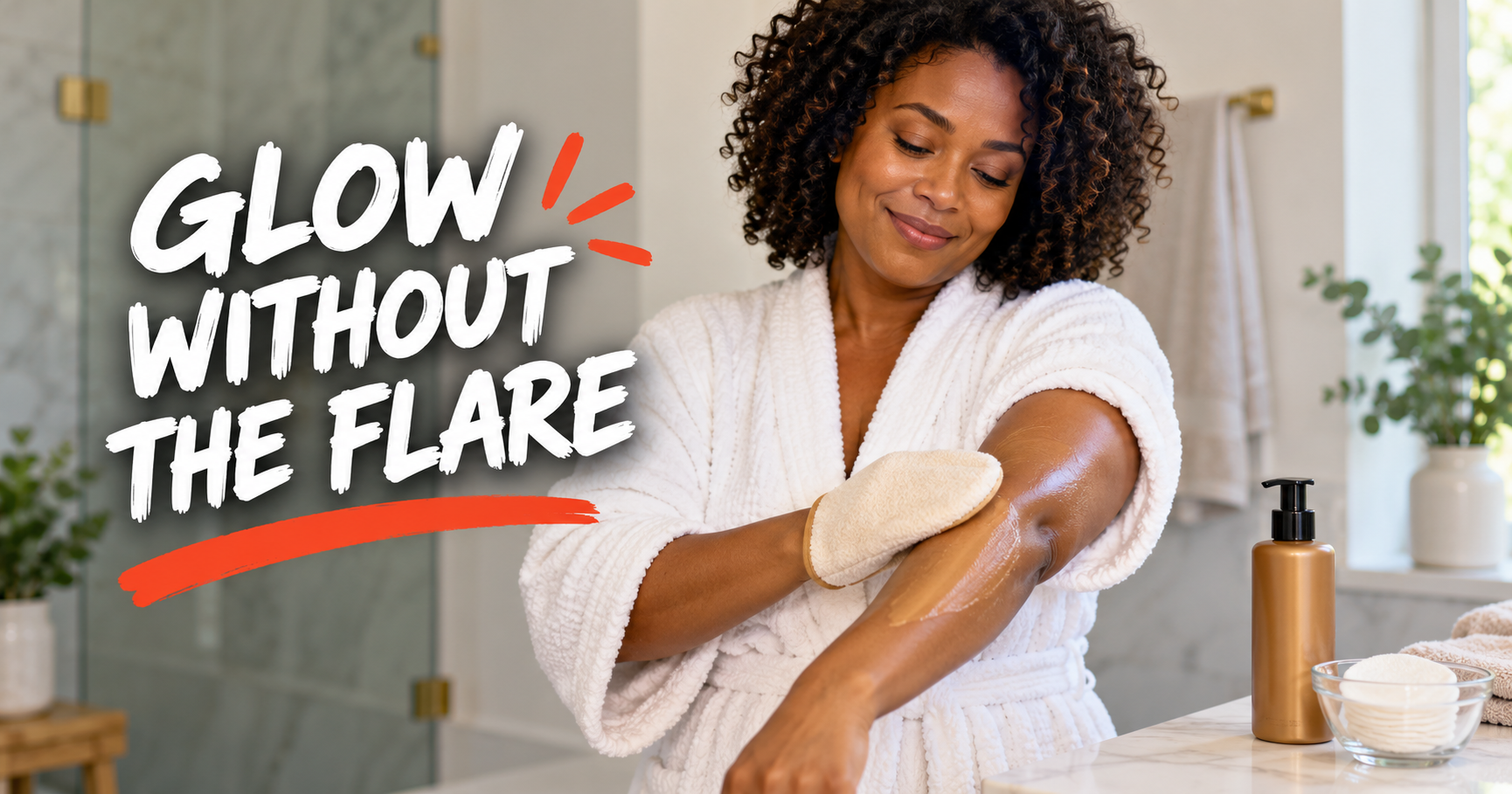
- Apply with a mitt. It gives smoother results with less rubbing.
- Go lightly over plaques. Many people skip raised plaques or apply less there.
- Let it dry. Avoid sweat, water, and tight clothes for the time directed.
Which Format Works Best?
| Format | Good For | Watch Out For |
|---|---|---|
| Lotion or cream | Dry skin, since it also moisturizes | Can be slow to dry |
| Gradual tanning lotion | Building color slowly, with less streaking | Takes several uses |
| Mousse | Quick, even application | Some contain alcohol |
| Spray | Hard-to-reach areas | Don’t breathe in the mist. Cover your eyes, nose, and mouth |
Quick Do’s and Don’ts
| Do | Don’t |
|---|---|
| Patch test first | Apply on cracked or raw skin |
| Choose fragrance-free, alcohol-free formulas | Scrub your skin before tanning |
| Use a lighter shade | Rely on it as sun protection |
| Moisturize first | Tan during an active flare |
| Use a mitt | Use tanning beds instead |
Remember: A Self-Tan Isn’t Sunscreen
Self-tanner doesn’t protect your skin from the sun. You still need sunscreen on exposed skin.
If You Use Prescription Treatments
If you use prescription creams, ask your doctor or pharmacist when to apply them in relation to self-tanner. Timing and which areas you treat can matter.
When to See a Doctor
- Your skin burns, itches, or breaks out after using self-tanner
- Psoriasis flares in areas where you applied it
- You’re not sure whether a patch is psoriasis or something else
- You want to know what’s safe with your current treatments
Self-tanner won’t treat your psoriasis, but with a gentle approach, it can help you feel more confident without risking your skin.
Mike Marenick is the founder of HealFast Skincare and holds the patent for his invention, Ovasome Technology, used in skincare formulations. He began developing skincare products after watching his mother manage psoriasis for decades, and has spent over twenty years formulating treatments for chronic skin conditions. His work has been featured on Home Shopping Network, in two national infomercials, and in more than 300 publications including Vogue, Newsweek, and Allure. He is not a medical doctor — always consult a dermatologist for diagnosis and treatment of skin conditions.
Leave a Reply