
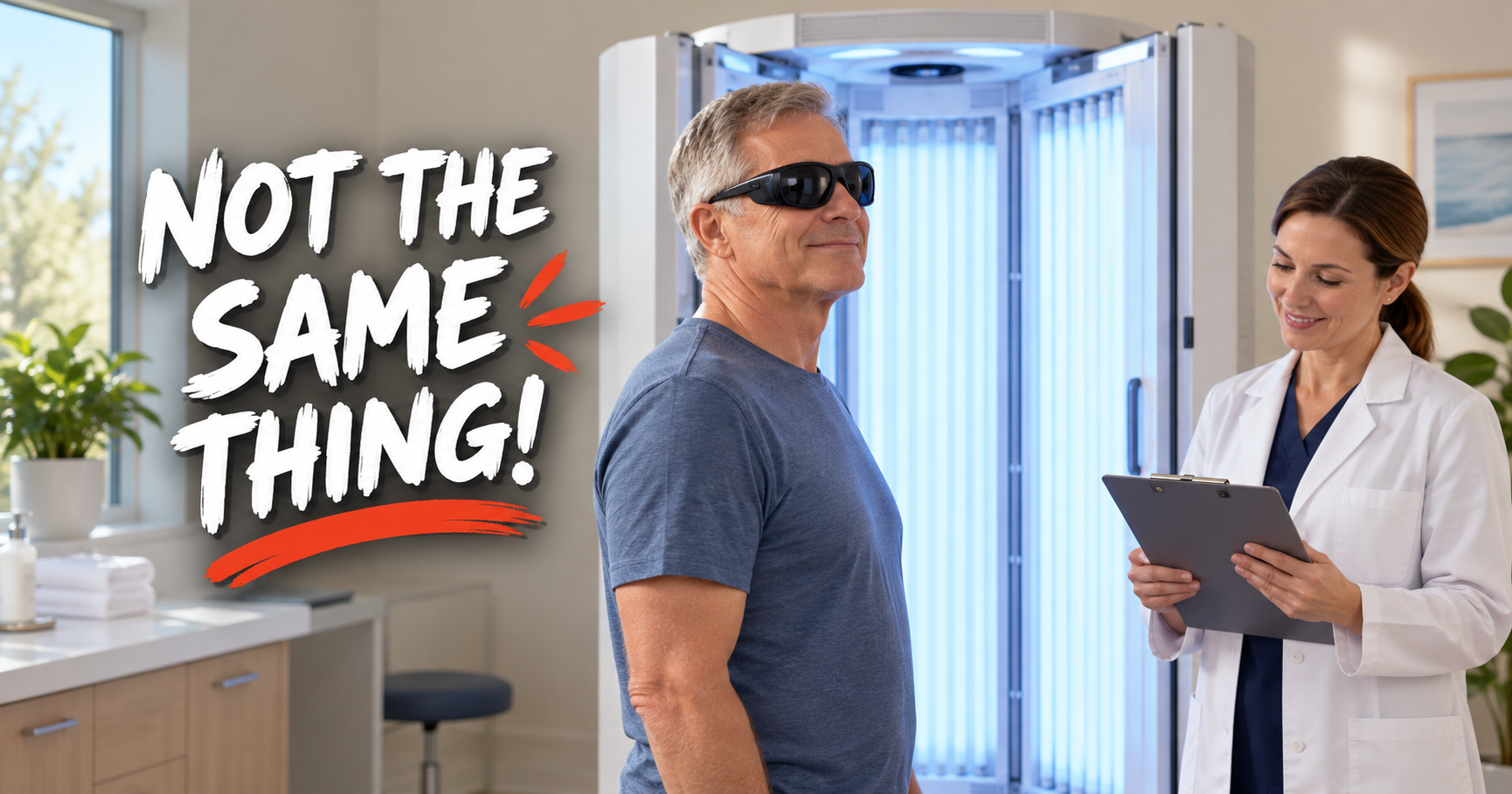
You may have heard that sunlight helps psoriasis, so a tanning bed might too. It’s a common idea, but tanning beds for psoriasis are not recommended, and the reasons are worth knowing. Medical light therapy and a tanning bed are not the same thing, even though both use UV light.
Why Light Helps Psoriasis at All
Psoriasis makes skin cells grow too fast. A specific kind of ultraviolet light, called UVB, can slow that growth, calm inflammation, and ease itching. That’s why dermatologists have used light therapy (phototherapy) for years.
The key word is specific. It’s the right kind of light, in the right dose, with medical supervision.
What’s Different About a Tanning Bed?
| Medical Phototherapy | Tanning Bed | |
|---|---|---|
| Main light type | Narrowband UVB (or UVA with medicine in special cases) | Mostly UVA, with a small amount of UVB |
| Aimed at | Treating psoriasis | Tanning the skin |
| Dose control | Carefully measured and adjusted | Not designed for treatment |
| Supervision | Dermatologist guides each step | None |
| Skin cancer risk | Managed and monitored | Higher, linked to melanoma |
| Recommended by dermatology groups | Yes | No |
The National Psoriasis Foundation does not recommend tanning beds as a psoriasis treatment. The American Academy of Dermatology and the FDA also advise against using them as a substitute for medical care.
The Risks of Tanning Beds
- Skin cancer. UVA light goes deeper into the skin and raises the risk of melanoma and other skin cancers.
- Sunburn. Burns can trigger new psoriasis patches, a response called the Koebner phenomenon.
- Faster skin aging. Wrinkles, spots, and leathery skin.
- Eye damage. Without proper protection, UV light can harm your eyes.
- Medication problems. Some medicines make skin much more sensitive to light.
A tanning bed might make psoriasis look a little better for a short time. That’s not worth the long-term risk.
What About Sunlight?
Short, controlled sun exposure helps some people. But sunlight is less effective than medical phototherapy, and too much sun can burn the skin and make psoriasis worse. If you want to try it, talk to your doctor first about how much is right for you and which spots to protect.
What About Home UVB Lamps?
You may see UVB lamps sold online. Some dermatologists do prescribe home UVB units, but that’s different from buying a lamp on your own. A prescribed unit comes with:
- A proper diagnosis
- A dose plan made for your skin
- Eye protection
- Follow-up skin checks
Buying a lamp without medical guidance can lead to burns, and it makes a flare more likely, not less.
What Medical Phototherapy Looks Like
- You visit a clinic, usually two to three times a week
- You stand in a booth with UVB lights, wearing eye protection
- Your doctor starts with a short dose and adjusts it slowly
- Treatment often continues for several weeks to months
- Your skin is checked regularly
It takes time and effort, but it’s the safe, tested way to use light for psoriasis.
When to Talk to Your Doctor
- Your psoriasis covers large areas or hasn’t responded to creams
- You’re curious about light therapy
- You’ve used tanning beds before and want to talk about skin checks
- You take medication and aren’t sure whether it affects sun sensitivity
- You notice a new or changing mole or spot
If you’ve used tanning beds in the past, there’s no need to feel embarrassed. It’s a good idea to mention it to your doctor and keep up with regular skin exams.
Mike Marenick is the founder of HealFast Skincare and holds the patent for his invention, Ovasome Technology, used in skincare formulations. He began developing skincare products after watching his mother manage psoriasis for decades, and has spent over twenty years formulating treatments for chronic skin conditions. His work has been featured on Home Shopping Network, in two national infomercials, and in more than 300 publications including Vogue, Newsweek, and Allure. He is not a medical doctor — always consult a dermatologist for diagnosis and treatment of skin conditions.
Leave a Reply