
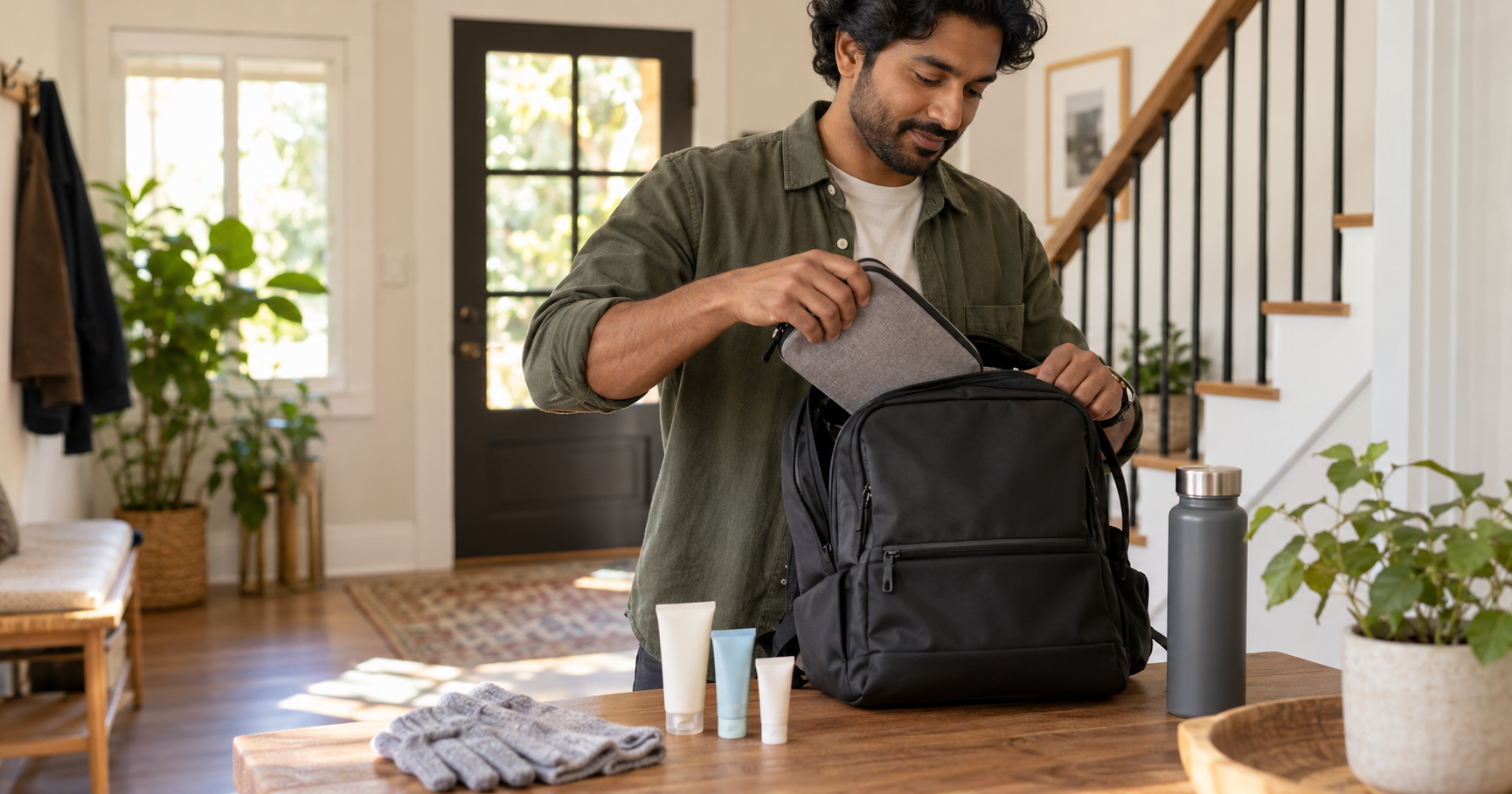
Having an eczema and psoriasis emergency kit in your bag can turn a flare from a ruined afternoon into a small speed bump. Flares don’t wait until you’re home with all your products. They show up at the office, on a plane, or in the middle of errands. A few small items, packed once and kept ready, can save you a lot of discomfort.
Why a Kit Beats Winging It
Dry air, hand soap, stress, and sunshine can all set off a flare when you’re away from your routine. Skin that’s already sensitive doesn’t do well with improvising, and neither does your mood. Having the basics with you means you can respond within minutes, and catching a flare early usually makes it easier to calm down.
What to Pack
| What to Carry | Why It’s Worth the Space | Great For |
|---|---|---|
| Your daily moisturizer (fragrance-free, travel size), such as Dermasolve’s Eczema Cream or Dermasolve’s Psoriasis Cream | Dry skin makes both conditions worse, and reapplying through the day helps a lot | Both |
| A thick balm or repair cream, such as HealFast’s Repair Cream | Perfect for dry, cracked spots on hands, elbows, or heels | Both |
| Prescribed topical treatment | Your dermatologist’s plan is the first line of defense when a flare starts | Both |
| Small tube of 1% hydrocortisone (only if your doctor okays it) | Handy for short-term relief of a small, irritated patch | Mostly eczema |
| Cotton gloves | Wear them over moisturizer to help it soak in, or to protect hands from irritants | Both |
| Hypoallergenic bandages | Cover cuts and scrapes. Psoriasis can flare at spots where skin is injured | Mostly psoriasis |
| Fragrance-free hand cleanser or wipes | Public restroom soap is often harsh and drying | Both |
| Sunscreen and a hat | A sunburn can trigger a psoriasis flare, and sweat can trigger eczema | Both |
A Few Notes on the Items Above
Keep it simple. A kit only works if you’ll actually carry it, so pick a small zippered pouch and skip anything you wouldn’t use.
Choose fragrance-free everything. You don’t want to test a new product in the middle of a flare. If you’re not sure how to spot a truly fragrance-free product, our guide on reading a skincare label walks through it.
Watch the size for flying. Airport security allows creams and gels in containers of 3.4 ounces (100 mL) or less, so pack travel-size versions in your carry-on, not your checked bag. That way a delayed suitcase won’t leave you stranded.
Talk to your doctor about hydrocortisone and antihistamines. Both are common kit items, but they aren’t right for everyone. Hydrocortisone is meant for short-term use on small areas, and research on antihistamines for eczema itch is mixed. Ask your dermatologist what makes sense for you before you pack them.
Your Kit for Different Situations
- At work or school: Keep moisturizer, a balm, and hand cleanser in your desk. Reapply after every handwashing.
- Traveling: Bring enough of your daily products for the whole trip plus a few extra days. Cabin air is very dry, so moisturize during the flight too.
- Outdoors: Add sunscreen and a hat. In cold weather, gloves and a scarf can keep your skin protected from the chill.
- Overnight: Put moisturizer on, then slip on cotton gloves, especially in dry hotel rooms.
What to Do When a Flare Starts
- Stop and gently clean the area. Use lukewarm water and a mild, fragrance-free cleanser if possible.
- Pat dry. Don’t rub.
- Apply your prescribed treatment first, if you have one. Then moisturize the surrounding skin. We break down the order in our eczema routine guide.
- Skip the scratching. Cover the area with a bandage or cotton glove if the itch is hard to resist.
- Note what may have caused it. A flare that shows up after a new soap, a stressful day, or a long time in the sun can tell you what to avoid next time.
When to See a Dermatologist
- Your flares aren’t calming down after a few days of consistent care
- A patch looks infected, with warmth, swelling, oozing, or a honey-colored crust
- You’re relying on your kit more and more often
- You’re not sure which products are safe for your specific skin
A kit is meant to help you handle small flares, not replace your treatment plan. Think of it as your backup, not your main strategy.
Mike Marenick is the founder of HealFast Skincare and holds the patent for his invention, Ovasome Technology, used in skincare formulations. He began developing skincare products after watching his mother manage psoriasis for decades, and has spent over twenty years formulating treatments for chronic skin conditions. His work has been featured on Home Shopping Network, in two national infomercials, and in more than 300 publications including Vogue, Newsweek, and Allure. He is not a medical doctor — always consult a dermatologist for diagnosis and treatment of skin conditions.
As an Amazon Associate, Itch and Flare earns from qualifying purchases.
Leave a Reply