
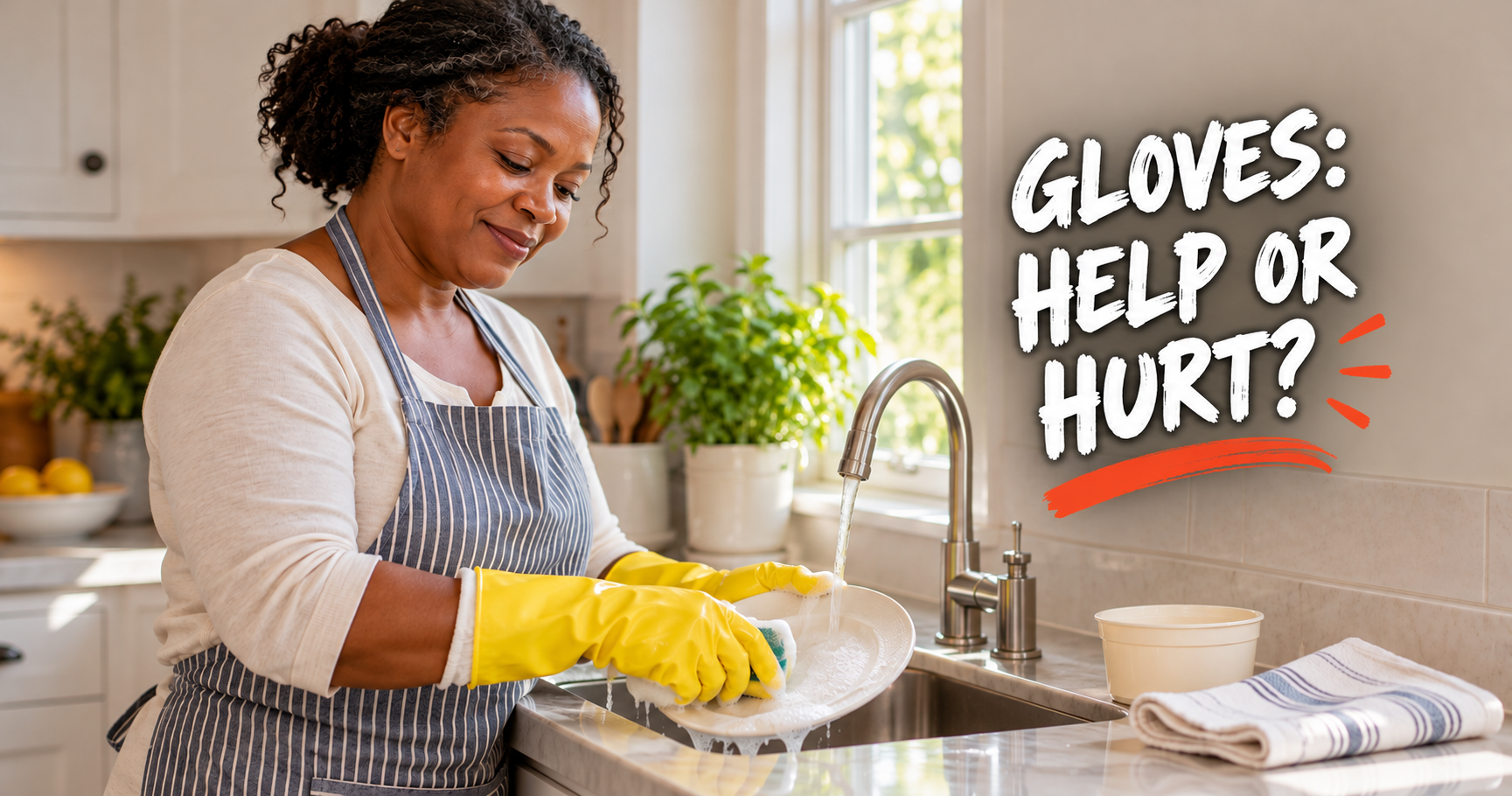
If you have hand eczema, you’ve probably heard “wear gloves.” It’s good advice for dishes and cleaning. But it creates a new problem: hand eczema and sweaty gloves often go together, and a hot, damp glove can make your skin worse. Here’s how to get the protection without the sweat.
Why Gloves Both Help and Hurt
Gloves keep water, soap, and cleaning products off your skin. Those are common eczema triggers, so gloves really do help.
The catch is that waterproof gloves don’t breathe. Sweat gets trapped against your skin. That wet, warm space can soften the skin barrier, irritate eczema, and give germs a place to grow. Studies have found that wearing sealed gloves for a few hours can increase the amount of bacteria on eczema-prone skin.
So the goal isn’t to avoid gloves. It’s to wear them smartly.
Step 1: Use a Cotton Liner
A thin cotton glove worn underneath absorbs sweat before it builds up. Experts recommend liners whenever you wear waterproof gloves for more than about 10 minutes.
- Choose smooth, soft, seamless cotton
- Make sure they fit well, since baggy liners bunch up
- Change them as soon as they feel damp
- Keep a few pairs on hand
Step 2: Pick the Right Outer Glove
| Glove Type | Good For | Notes |
|---|---|---|
| Heavy-duty vinyl or nitrile | Dishes, cleaning, laundry | Often a better choice than natural rubber |
| Natural rubber (latex) | General chores | Can cause allergy in some people, so wear over a cotton liner |
| Cotton gloves alone | Dry tasks, overnight moisturizing | Not waterproof |
| Leather or heavy fabric | Gardening, dry work | Not for wet jobs |
Step 3: Keep Wet Jobs Short
Even with a liner, don’t stay in sealed gloves too long.
- Take breaks for your skin to breathe and cool
- Take gloves off if your hands feel hot or sweaty
- Split big cleaning jobs into shorter sessions
- Dry your hands fully before putting gloves back on
Step 4: Care for the Gloves, Too
- Turn reusable gloves inside out and let them dry completely after each use
- Wash cotton liners after every wear
- Check the inside for roughness, cracks, or leftover soap
- Toss torn gloves. Water seeping inside can be worse than no glove
Step 5: Moisturize After Every Wet Job
Pat your hands dry and apply a thick, fragrance-free cream right away, while the skin is still a little damp. Dermasolve Eczema Cream is made with colloidal oatmeal and works well as a go-to after chores. Reapply after washing your hands during the day, too.
At night, some people moisturize and then wear thin cotton gloves to bed. That’s a helpful way to lock the cream in. For more on the different types of hand and body eczema, see our guide to atopic, contact, and dyshidrotic eczema.
Quick Do’s and Don’ts
| Do | Don’t |
|---|---|
| Wear a cotton liner under waterproof gloves | Wear sealed gloves for long stretches |
| Change damp liners | Reuse sweaty gloves |
| Dry gloves inside and out | Put gloves on over wet hands |
| Take breaks during wet work | Ignore burning or itching inside gloves |
| Moisturize after every wet job | Skip moisturizer because hands feel fine |
When to See a Doctor
- Your hands are cracked, bleeding, or weeping
- You notice yellow crusting, pus, or swelling
- Redness or blisters start soon after wearing gloves, which may mean a glove allergy
- Your hands don’t improve even with careful protection
- Hand eczema is affecting your work
Hand eczema is common, especially for people who wash their hands often or work with water. A doctor can help find your triggers and recommend the right treatment.
Mike Marenick is the founder of HealFast Skincare and holds the patent for his invention, Ovasome Technology, used in skincare formulations. He began developing skincare products after watching his mother manage psoriasis for decades, and has spent over twenty years formulating treatments for chronic skin conditions. His work has been featured on Home Shopping Network, in two national infomercials, and in more than 300 publications including Vogue, Newsweek, and Allure. He is not a medical doctor — always consult a dermatologist for diagnosis and treatment of skin conditions.
This post contains affiliate links. As an Amazon Associate, I earn from qualifying purchases.
Leave a Reply