
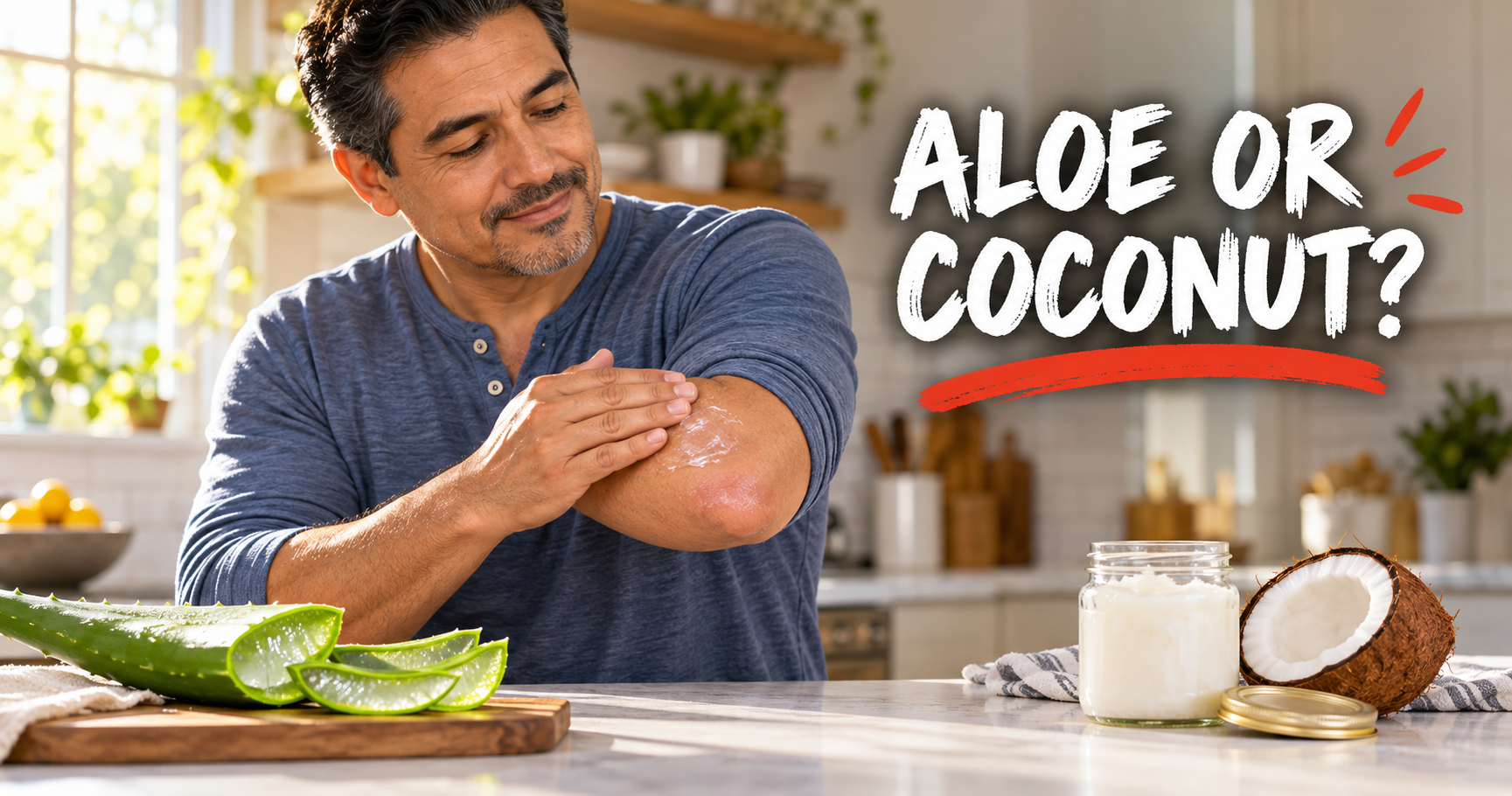
If you’re choosing between aloe vera vs. coconut oil for psoriasis, you’re in good company. Both are popular, both are easy to find, and both are often called “natural” fixes for itchy, scaly skin. But they work in different ways, and the science behind each one is not the same. Here’s how they compare.
Aloe Vera: Cooling and Calming
Aloe vera gel comes from the inside of the aloe plant’s leaves. It feels cool on the skin, which is a big reason people reach for it when psoriasis itches or burns.
What the evidence says:
- The National Psoriasis Foundation suggests using a cream that contains about 0.5% aloe.
- Some studies suggest aloe may help ease redness and scaling. The research is still limited, and aloe is not a cure.
- It’s generally well tolerated, but a small number of people get redness or irritation, especially with long-term use.
One important warning: stay with aloe on the skin. Aloe tablets and oral products have not been shown to help psoriasis, and the National Psoriasis Foundation says they can be dangerous.
Best for: itch, redness, and a cooling feel. It’s lightweight, so it doesn’t feel greasy.
Coconut Oil: Rich and Moisturizing
Coconut oil is a thick, natural moisturizer. It sits on top of the skin and helps hold moisture in, which can soften dry, scaly patches.
What the evidence says:
- There’s no strong proof that coconut oil treats psoriasis itself.
- Small lab and animal studies suggest it may calm inflammation and support the skin barrier, but research in people with psoriasis is lacking.
- Many dermatologists consider it a safe, simple moisturizer for most people.
Watch out for:
- It can feel greasy and stain clothes and sheets
- It can clog pores, so be careful on the face and chest
- Some people are allergic to it
- It can feel too heavy on skin that is already irritated
Best for: very dry, thick, scaly patches like elbows and knees, where you want a rich moisturizer.
Side by Side
| Aloe Vera | Coconut Oil | |
|---|---|---|
| Feels like | Cool, light, watery | Rich, thick, greasy |
| Main job | Soothes itch and redness | Moisturizes and softens scale |
| Evidence for psoriasis | Some studies, still limited | Little direct evidence |
| Good for | Itchy, red, irritated skin | Dry, thick, scaly plaques |
| Watch out for | Redness or allergy in some people | Greasiness, clogged pores, staining |
| Face and body folds | Usually fine | Use with care |
So Which Should You Choose?
It depends on what your skin needs most:
- Itchy and red? Start with aloe.
- Dry, tight, and scaly? Coconut oil may feel better.
- Both? Many people use aloe for itch relief and a rich moisturizer afterward.
Neither one replaces your treatment plan. They’re comfort tools, not medicine.
A Simple Way to Get Both
If you’d rather not juggle two products, look for a cream made with aloe and a gentle plant oil. The Dermasolve Psoriasis Cream contains aloe and sweet almond oil, and it also contains salicylic acid to help loosen scale. Use it on intact skin and skip it on cracked or bleeding patches, since salicylic acid can sting there.
How to Try Either One Safely
- Patch test first. Put a small amount on one spot for a day to check for a reaction.
- Apply to clean, slightly damp skin, ideally after a bath or shower.
- Start with a small area. Don’t cover your whole body on day one.
- Stop if your skin gets redder, itchier, or starts to burn.
- Skip open or bleeding skin. Ask your doctor what to use there.
If your hands and feet are the problem, see our guide to psoriasis on your hands and feet.
When to See a Doctor
- Your psoriasis is spreading or getting worse
- Skin is cracked, bleeding, or looks infected
- Home care isn’t helping after a few weeks
- You’re using prescription treatments and want to know what’s safe to add
Aloe and coconut oil can make your skin more comfortable. The right choice is the one your skin tolerates best.
Mike Marenick is the founder of HealFast Skincare and holds the patent for his invention, Ovasome Technology, used in skincare formulations. He began developing skincare products after watching his mother manage psoriasis for decades, and has spent over twenty years formulating treatments for chronic skin conditions. His work has been featured on Home Shopping Network, in two national infomercials, and in more than 300 publications including Vogue, Newsweek, and Allure. He is not a medical doctor — always consult a dermatologist for diagnosis and treatment of skin conditions.
This post contains affiliate links. As an Amazon Associate, I earn from qualifying purchases.
Leave a Reply