
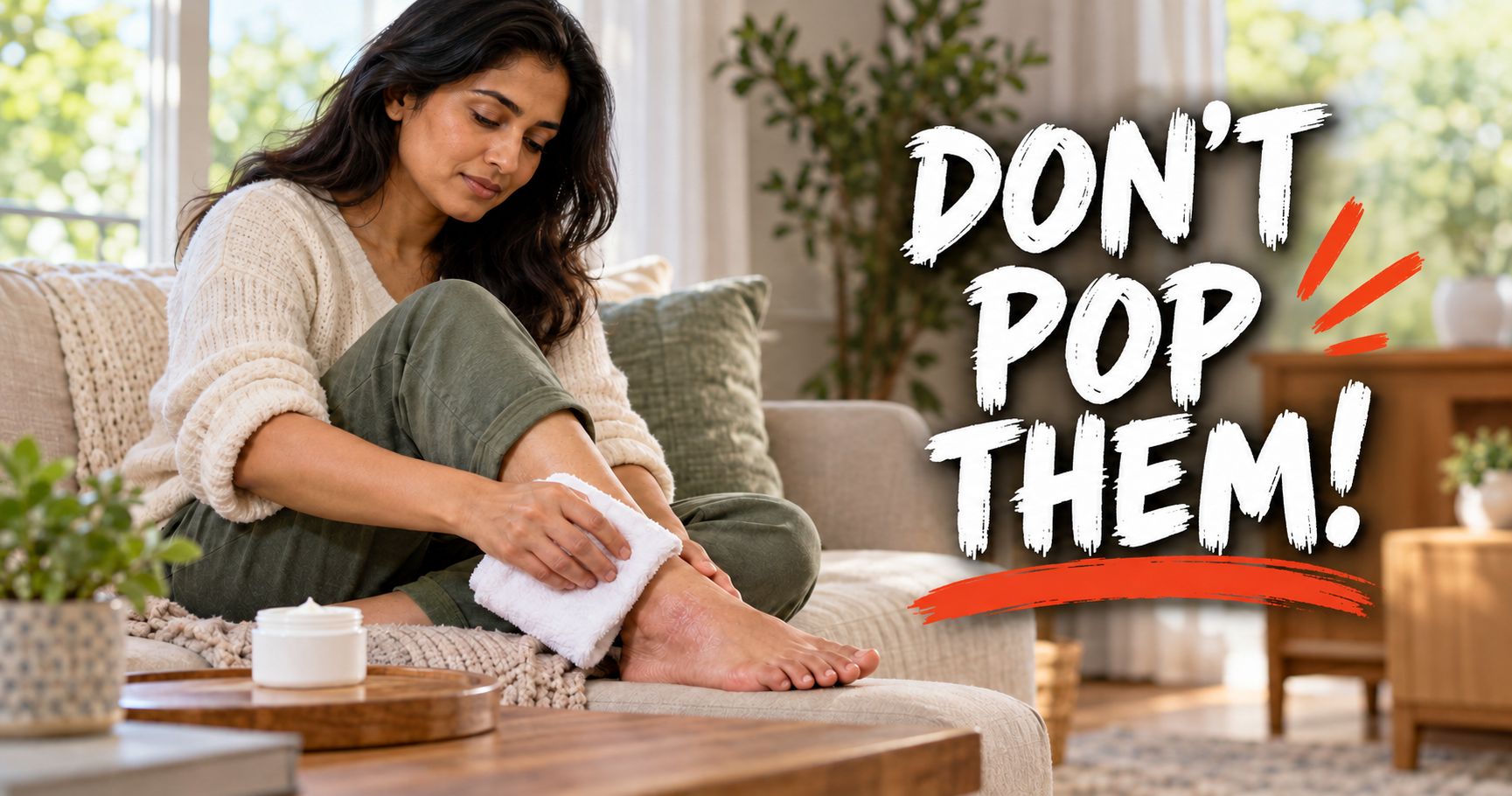
Eczema blisters on feet can be maddening. They’re small, deep, and intensely itchy, and the urge to pop them is hard to resist. But popping makes things worse. Here’s what these blisters are, what actually helps them heal, and what to leave alone.
What Are These Blisters?
The blisters are usually dyshidrotic eczema, also called dyshidrosis or pompholyx. It causes tiny, fluid-filled bumps on the soles, the sides of the toes, and sometimes the palms and fingers. They often appear in clusters and can itch or burn.
As they heal, the skin dries out, peels, and may crack. The cause isn’t fully known. Stress, allergies, and sweaty or constantly damp feet are common triggers. It isn’t contagious. For the full rundown of eczema types, see our guide to atopic, contact, and dyshidrotic eczema.
Why You Shouldn’t Pop Them
It’s tempting, but resist. The skin over a blister is a natural cover. It protects the raw layers underneath from germs. Popping it opens the door to infection and can slow healing.
Large blisters are the exception, but that’s for a doctor, not your kitchen. If a blister is very big or so painful that you can’t walk, see a healthcare provider about it.
What Actually Helps
1. Cool compresses
Dermatologists often recommend cool, damp compresses for drying out and calming these blisters.
- Soak a clean cloth in cool water and wring it out
- Rest it on your foot for 10 to 15 minutes
- Repeat a few times a day
- Pat dry gently afterward
Cool, not ice cold. Ice can irritate the skin.
2. Moisturize right after
After a compress, moisturize while the skin is still slightly damp. A simple, thick, fragrance-free cream works best. Dermasolve Eczema Cream is made with colloidal oatmeal and fits this step well. Apply it once the blisters have dried and the skin is intact. If any blisters are open or oozing, check with your doctor before putting anything on them.
3. Keep your feet clean and dry
Sweat and trapped moisture can trigger blisters, so a good routine matters.
- Wash gently. Use a mild, fragrance-free cleanser on intact skin. Dermasolve Eczema Bodywash is made for eczema-prone skin. Use your hands, not a scrubber, and skip it on any open or weeping blisters.
- Dry well, especially between the toes.
- Choose breathable shoes when you can
- Wear clean cotton or moisture-wicking socks, and change them if they get damp
- Let your shoes air out between wears
4. Ask about prescription treatment
For stubborn or painful cases, dermatologists often prescribe a topical steroid for short periods. That’s a decision for your doctor, not something to guess at.
What to Avoid
| Do | Don’t |
|---|---|
| Use cool compresses | Pop or pick the blisters |
| Moisturize after each soak | Scrub or exfoliate the area |
| Wear breathable socks and shoes | Wear damp socks all day |
| Use gentle, fragrance-free cleansers | Use harsh soaps or foot scrubs |
| Stay off your feet when blisters are painful | Soak in hot water |
| Ask a doctor about medicated soaks | Try strong home remedies on broken skin |
When to See a Doctor
- Blisters are filled with pus, or the skin is red, warm, and swollen
- You have a fever
- The pain makes it hard to walk
- Blisters keep returning
- You’re not sure it’s eczema, since other conditions can cause foot blisters
The good news is that these blisters often clear up in a few weeks. Gentle care and patience help most.
Mike Marenick is the founder of HealFast Skincare and holds the patent for his invention, Ovasome Technology, used in skincare formulations. He began developing skincare products after watching his mother manage psoriasis for decades, and has spent over twenty years formulating treatments for chronic skin conditions. His work has been featured on Home Shopping Network, in two national infomercials, and in more than 300 publications including Vogue, Newsweek, and Allure. He is not a medical doctor — always consult a dermatologist for diagnosis and treatment of skin conditions.
This post contains affiliate links. As an Amazon Associate, I earn from qualifying purchases.
Leave a Reply