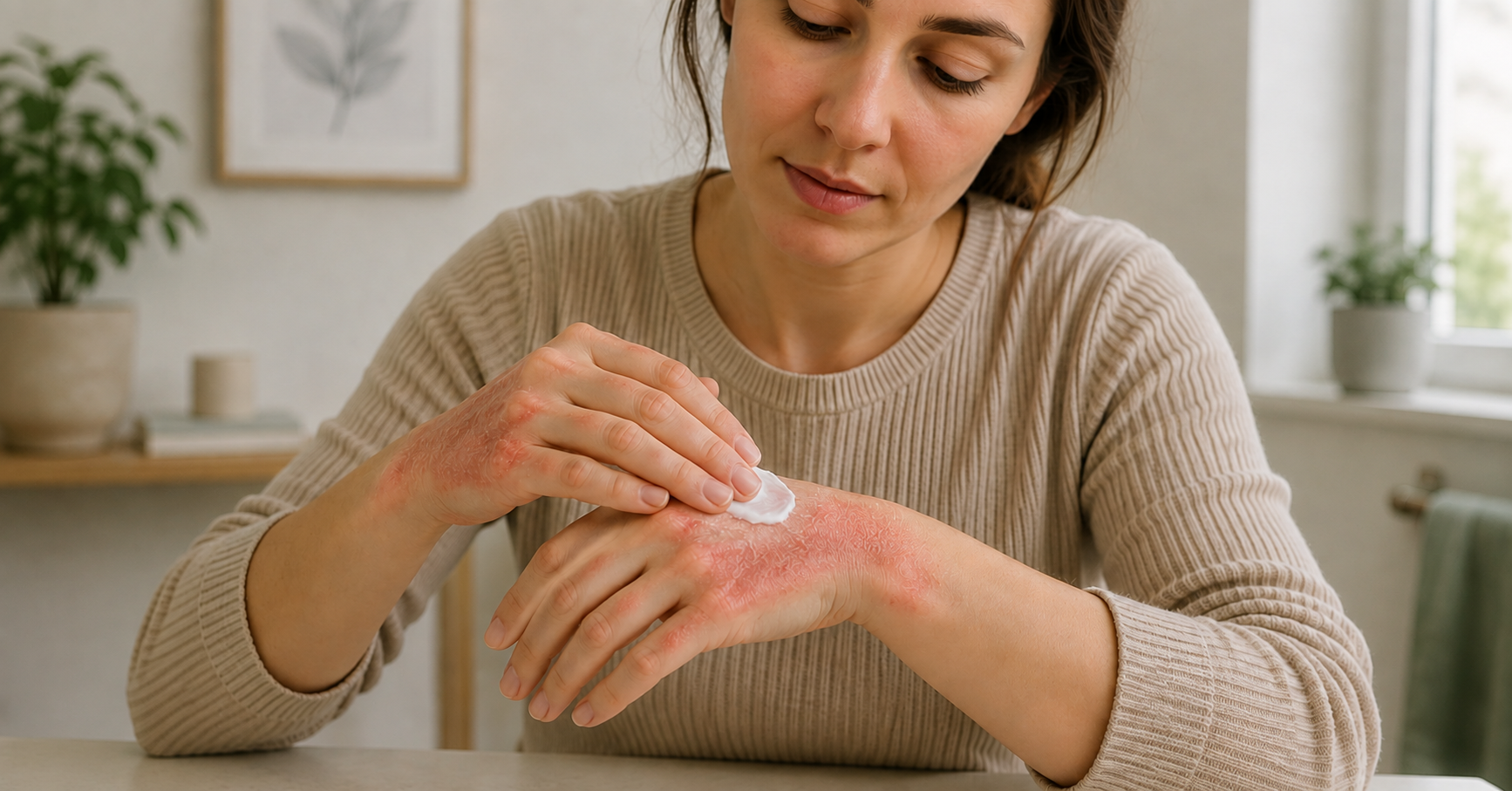
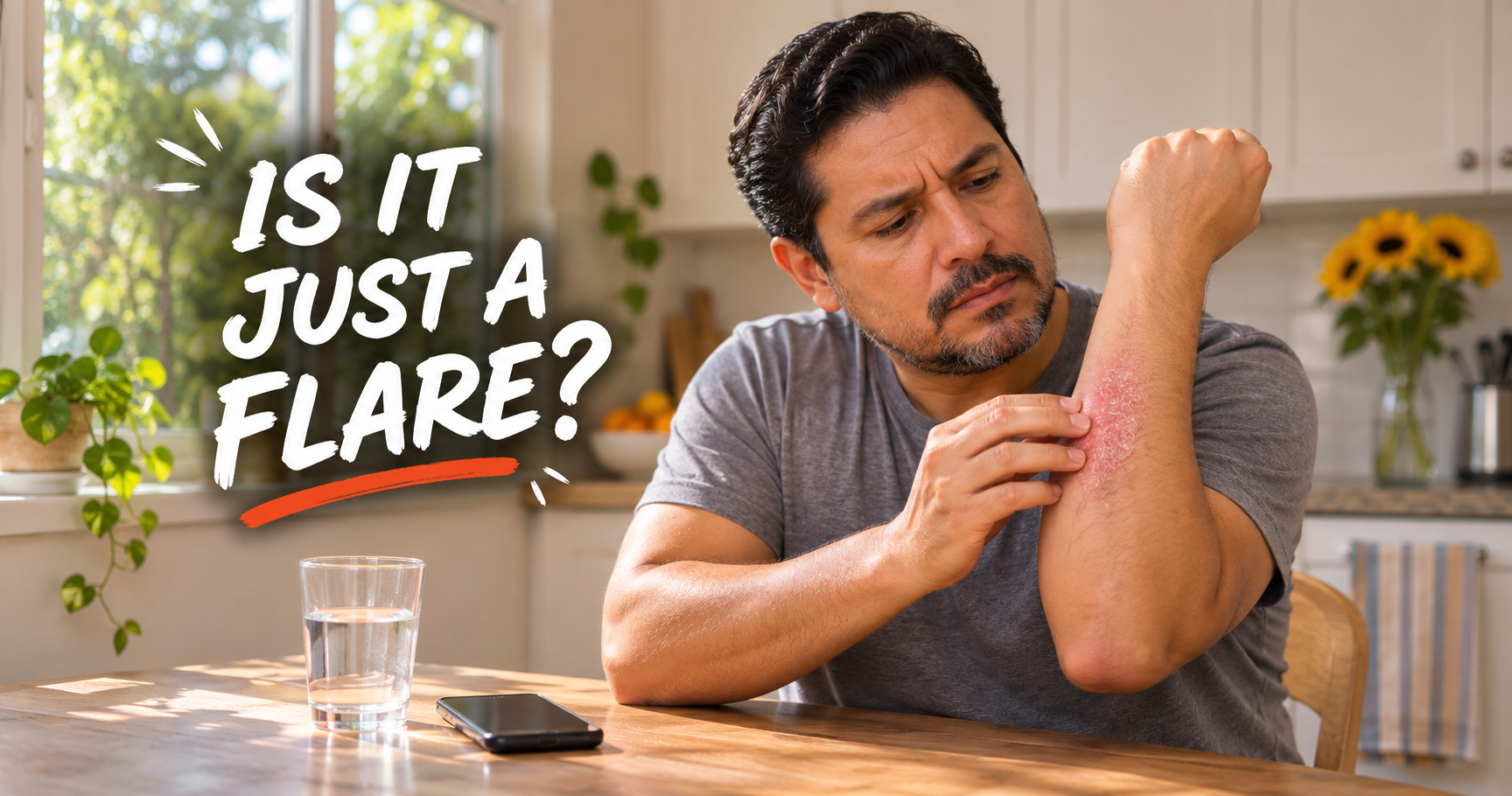
Infected eczema can look a lot like a bad flare, which is why it often goes unnoticed. Eczema weakens the skin’s barrier, and broken skin gives bacteria an easy way in. The difference matters because an infection needs medical treatment. More moisturizer won’t clear it.
Why Eczema Skin Gets Infected
Healthy skin keeps germs out. Eczema skin is dry, cracked, and often scratched open, so bacteria can get through. Staph is the most common culprit. Viruses, including the one that causes cold sores, can also infect eczema skin.
Scratching makes it worse. Every scratch opens the skin a little more. If you’re caught in that cycle, see our article on thick, leathery skin from scratching.
Signs of Infected Eczema
Look for any of these on top of your usual eczema:
- Honey-, yellow-, or orange-colored crusts. These often look like dried honey or brown sugar stuck to the skin.
- Blisters or bumps filled with pus.
- Sores that look like cold sores or fever blisters.
- Red, swollen, painful bumps.
- Weeping or oozing that keeps coming back.
- Skin that feels hot, swollen, or sore instead of just itchy.
- Eczema that stops responding to the treatment that normally works.
Itch vs. Pain: A Useful Clue
Eczema mostly itches. Infected skin tends to hurt, burn, or throb. If your patch has changed from itchy to sore, take it seriously.
On darker skin, redness can be harder to see. Go by how the skin feels and looks, including crusts, pus, and swelling. Our guide to what eczema looks like on dark brown skin has more.
| Usual flare | Possible infection |
|---|---|
| Mostly itchy | Painful, burning, or throbbing |
| Dry, scaly, or clear weeping | Honey-colored crust or pus |
| Improves with your usual care | Stays the same or gets worse |
| You feel fine | Fever, chills, or swollen glands |
Get Care Today If You See These
- A fever or chills, or you feel generally unwell
- Red streaks spreading from the patch
- Swelling, warmth, or fast-spreading redness
- A sudden cluster of painful small blisters. See painful blisters on eczema.
- Any sign of infection near the eyes
- A fever of 100.4°F or higher in a child
If the signs are milder and you feel normal, call your dermatologist or doctor soon. Don’t wait to see if it goes away.
What Not to Do
- Don’t pick or peel the crusts. That opens the skin more.
- Don’t pop blisters.
- Don’t cover weeping skin with heavy oils, fats, or home remedies. They can trap bacteria.
- Don’t add wet wraps without asking. Ask your doctor first if you suspect infection. See our wet wrap guide for the basics.
- Don’t start bleach baths on your own. Doctors sometimes recommend them for people with repeat infections, but only with exact directions.
What a Doctor May Do
Your doctor will look at the skin and may take a swab to find out what is causing the infection. Mild bacterial infections are often treated with an antibiotic ointment. More serious ones may need antibiotics by mouth. A viral infection needs a different medicine, so the right diagnosis matters.
How to Lower the Risk
- Keep skin moisturized so the barrier stays strong.
- Follow the treatment plan your doctor gave you for flares.
- Keep nails short and smooth. For little ones, see what helps with toddler scratching at night.
- Treat small breaks in the skin early, and tell your doctor if infections keep coming back.
For more patient information, visit the National Eczema Association.
Mike Marenick is the creator of HealFast Skincare and DermaSolve, and holds the patent for his invention, Ovasome Technology, used in skincare formulations. He began developing skincare products after watching his mother manage psoriasis for decades, and has spent over twenty years formulating treatments for chronic skin conditions. His work has been featured on Home Shopping Network, in two national infomercials, and in more than 300 publications including Vogue, Newsweek, and Allure. He is not a medical doctor — always consult a dermatologist for diagnosis and treatment of skin conditions.