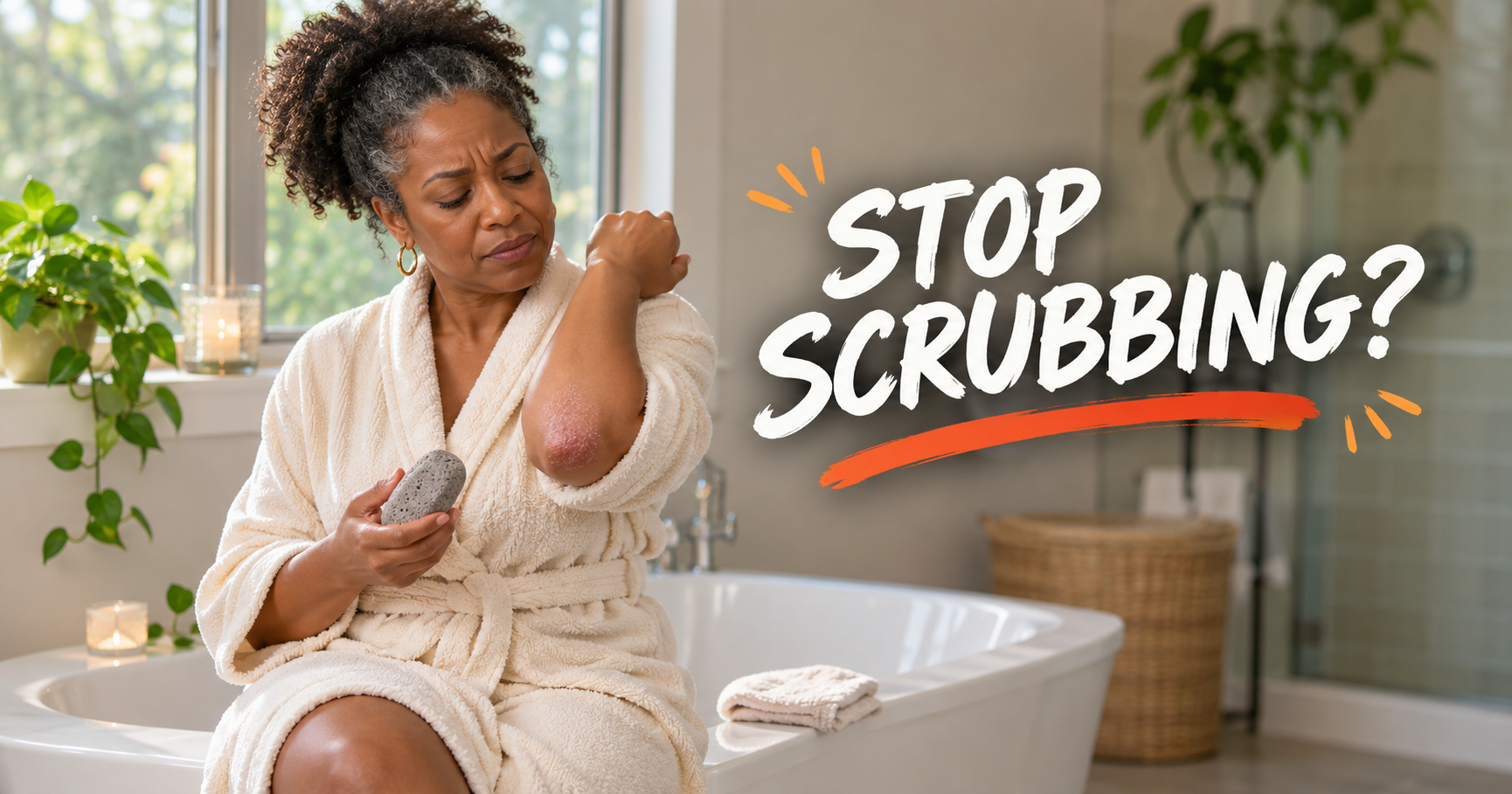
Using a pumice stone for psoriasis feels like common sense. The patch is rough, flaky, and thick, so scrubbing it smooth seems like the obvious fix. The trouble is that psoriasis skin doesn’t respond to injury the way normal skin does. Scrubbing can make the patch worse, and it can start new ones.
Why Psoriasis Reacts to Skin Injury
Doctors call it the Koebner phenomenon. Scratches, sunburns, bug bites, and other injuries to the skin can trigger new psoriasis plaques right where the skin was hurt. The National Psoriasis Foundation lists injury to the skin as a known trigger. It is thought to affect about 1 in 4 people with plaque psoriasis.
New plaques often follow the shape of the injury, so you may see a line or streak where you scrubbed. They can show up within days or weeks. With milder, repeated rubbing, they can take much longer to appear.
Not everyone with psoriasis reacts this way. But there is no easy way to know whether you do until it happens.
Why a Pumice Stone Is a Risky Tool
A pumice stone is rough on purpose. On psoriasis skin, that causes a few problems:
- It injures the skin underneath. Psoriasis scale sits on top of inflamed, fragile skin. Scraping it off can tear that skin and cause bleeding.
- It can spread the problem. The scrubbed area, and the skin around it, can break out in new plaques.
- It can lead to infection. Broken skin gives bacteria an easy way in.
- It doesn’t last. The scale grows back quickly, so people keep scrubbing, and the cycle continues.
If scratching leaves you with thick, rough skin, see our article on thick, leathery skin from scratching. It’s the same cycle of irritation.
A Note on Mixed Advice
You may find sources that say a pumice stone is fine on very thick scale if you go gently, after a soak. Other dermatologists say to skip it completely. Because the downside is new plaques and broken skin, the safer choice is to avoid it on active patches.
If your dermatologist does okay it for a particular spot, follow their directions. Never use it on skin that is red, cracked, bleeding, or newly flared.
Gentler Ways to Loosen Scale
The goal is to let the scale soften and release on its own, not to force it off.
- Soak first. Spend 10 to 15 minutes in lukewarm water. Hot water dries the skin out. See our guide to oatmeal, Dead Sea, and Epsom salt baths.
- Pat dry. Don’t rub with the towel.
- Apply a scale-lifting product. Ingredients like salicylic acid, lactic acid, or urea soften scale chemically. Read more in Salicylic Acid for Psoriasis: Is It Safe?
- Moisturize right away. Use a thick, fragrance-free moisturizer while the skin is still damp.
- Let loose scale come off on its own. If a flake lifts without any effort, you can brush it away with your fingers. If it resists, leave it alone.
| Instead of | Try |
|---|---|
| Pumice stone or loofah | Soft washcloth or clean hands |
| Picking or scraping scale | Scale-lifting cream, then moisturizer |
| Hot showers | Lukewarm water, short soaks |
| Scrubbing a new rough patch | Moisturizing it and watching for a few days |
Scalp scale needs its own approach. We cover it in how to remove scalp psoriasis scales safely.
A Gentler Option From My Line
The DermaSolve Psoriasis Cream (a product I make) contains the active ingredient salicylic acid, an over-the-counter scale lifter. Used as directed, it works on the scale chemically instead of by scraping. As with any salicylic acid product, use it on intact skin and skip cracked or bleeding patches.
When to See a Doctor
- Scale is very thick and doesn’t improve with gentle care.
- You’ve already scrubbed and new patches are showing up in lines or streaks.
- The skin is bleeding, oozing, or has crusting.
- You notice warmth, spreading redness, pus, or a fever. These can be signs of infection.
- You’re not sure whether the patch is psoriasis at all.
A dermatologist can safely thin thick plaques and adjust your treatment so you don’t need to scrub.
For more patient information on triggers, visit the National Psoriasis Foundation.
Mike Marenick is the creator of HealFast Skincare and DermaSolve, and holds the patent for his invention, Ovasome Technology, used in skincare formulations. He began developing skincare products after watching his mother manage psoriasis for decades, and has spent over twenty years formulating treatments for chronic skin conditions. His work has been featured on Home Shopping Network, in two national infomercials, and in more than 300 publications including Vogue, Newsweek, and Allure. He is not a medical doctor — always consult a dermatologist for diagnosis and treatment of skin conditions.
This post contains affiliate links. As an Amazon Associate, I earn from qualifying purchases.