
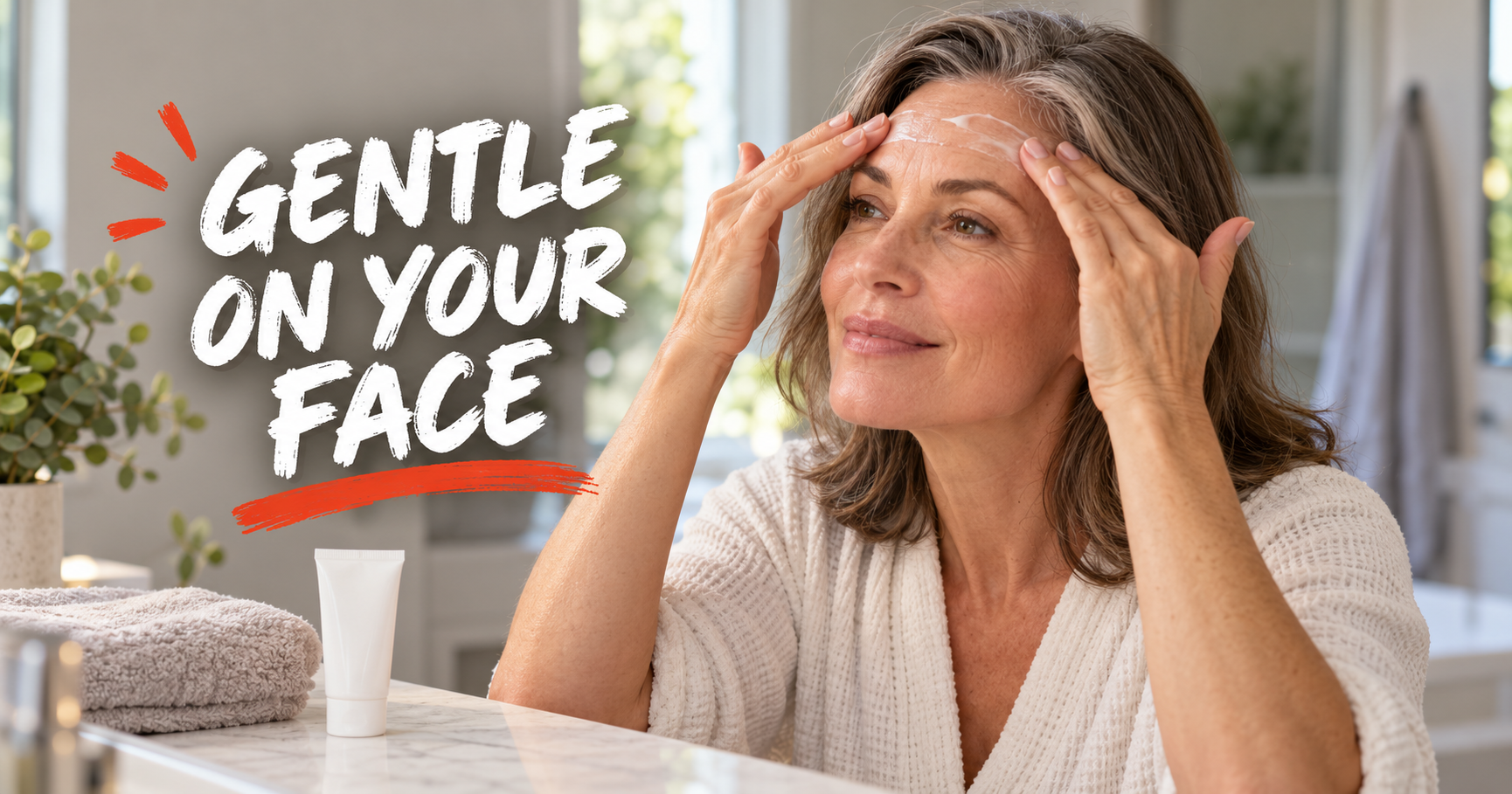
Psoriasis on your face can be upsetting. It’s right there for everyone to see, and the skin is so delicate that many of the usual treatments are too strong. If you’re dealing with psoriasis on your face, the key is a gentle approach. Here’s where it shows up, what to use, and what to leave alone.
Where It Shows Up
Facial psoriasis most often appears along the:
- Hairline and forehead
- Eyebrows
- Folds beside the nose
- Ears and the skin behind them
- Eyelids (the most delicate spot)
- Cheeks and chin, in more widespread cases
On the face, psoriasis often looks pink or red with fine, light scale, instead of the thick, silvery plaques you see on elbows and knees. It can also look a lot like seborrheic dermatitis, which makes it hard to tell apart. A doctor can help sort it out. For more on how psoriasis can look, see our guide to the different types of psoriasis.
Why the Face Is Different
Facial skin is thin and absorbs products more easily. That means:
- Strong treatments are more likely to burn or irritate
- Strong steroid creams can thin the skin, cause redness, and trigger other problems
- Steroids near the eyes can be risky
- Many scrubs, acids, and peels meant for acne or aging can make psoriasis worse
Because of this, facial psoriasis is usually treated with milder options, often prescribed by a doctor.
A Gentle Daily Routine
Morning
- Rinse or cleanse gently. Use lukewarm water and a mild, fragrance-free, soap-free cleanser. Pat dry.
- Moisturize. Apply a fragrance-free cream while the skin is still slightly damp.
- Protect with sunscreen. Choose a gentle, fragrance-free formula. Sun exposure can irritate skin, though a little may help some people.
Evening
- Cleanse gently. Remove makeup carefully, without rubbing.
- Moisturize again. Don’t skip this step.
- Apply any treatment your doctor prescribed.
What Helps
| Helpful | Why |
|---|---|
| Lukewarm water | Hot water dries out skin and irritates psoriasis |
| Fragrance-free, soap-free cleanser | Cleans without stripping skin |
| Daily moisturizer | Softens scale and reduces tightness |
| Gentle sunscreen | Protects delicate skin |
| Patting dry | Avoids friction |
| Gentle makeup removal | Reduces irritation |
What to Avoid
| Avoid | Why |
|---|---|
| Scrubs, brushes, and rough washcloths | Can trigger new patches |
| Alcohol-based toners and astringents | Dry and sting skin |
| Strong acids and peels | Can burn thin skin |
| Fragranced products | Common irritants |
| Hot water and steam | Can worsen redness and itch |
| Picking at flakes | Can cause scarring and new patches |
| Strong steroid creams without a doctor | Can thin facial skin |
| Coal tar on the face | Can irritate and stain |
A Cream Made for Psoriasis, Face Included
The Dermasolve Psoriasis Cream is steroid-free and coal tar-free, and it can be used on the face. It contains salicylic acid to help with scale, along with aloe and sweet almond oil. A few tips:
- Test it first. Try a small amount on one spot for a day.
- Start slowly, once a day, and build up if your skin is comfortable.
- Keep it away from your eyes and use only as directed on the label.
- Stop if your skin burns or gets redder.
What a Doctor Can Offer
If your facial psoriasis is stubborn, a doctor may suggest:
- Low-strength steroid creams for short periods
- Steroid-free prescription creams, especially for eyelids and sensitive spots
- Treatment for hairline psoriasis along with scalp care
- Tests to rule out seborrheic dermatitis or another condition
When to See a Doctor
- The psoriasis is on or near your eyelids
- Your face is painful, cracked, or oozing
- You see crusting, blisters, or signs of infection
- Home care isn’t helping after a few weeks
- You’re not sure whether it’s psoriasis, eczema, or seborrheic dermatitis
Facial psoriasis can be frustrating, but gentle care goes a long way. Be patient, keep it simple, and let your skin settle.
Mike Marenick is the founder of HealFast Skincare and holds the patent for his invention, Ovasome Technology, used in skincare formulations. He began developing skincare products after watching his mother manage psoriasis for decades, and has spent over twenty years formulating treatments for chronic skin conditions. His work has been featured on Home Shopping Network, in two national infomercials, and in more than 300 publications including Vogue, Newsweek, and Allure. He is not a medical doctor — always consult a dermatologist for diagnosis and treatment of skin conditions.
This post contains affiliate links. As an Amazon Associate, I earn from qualifying purchases.
Leave a Reply