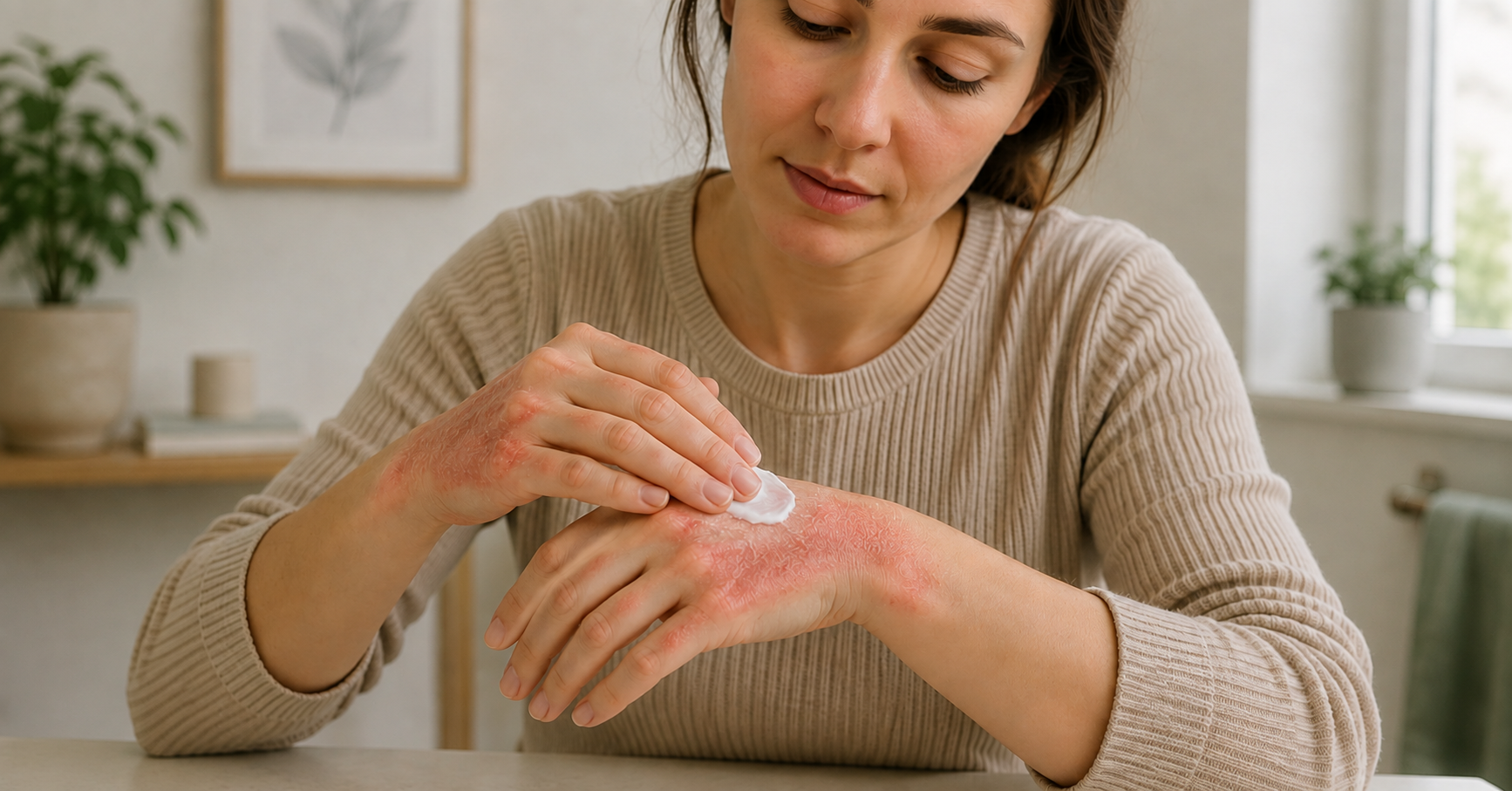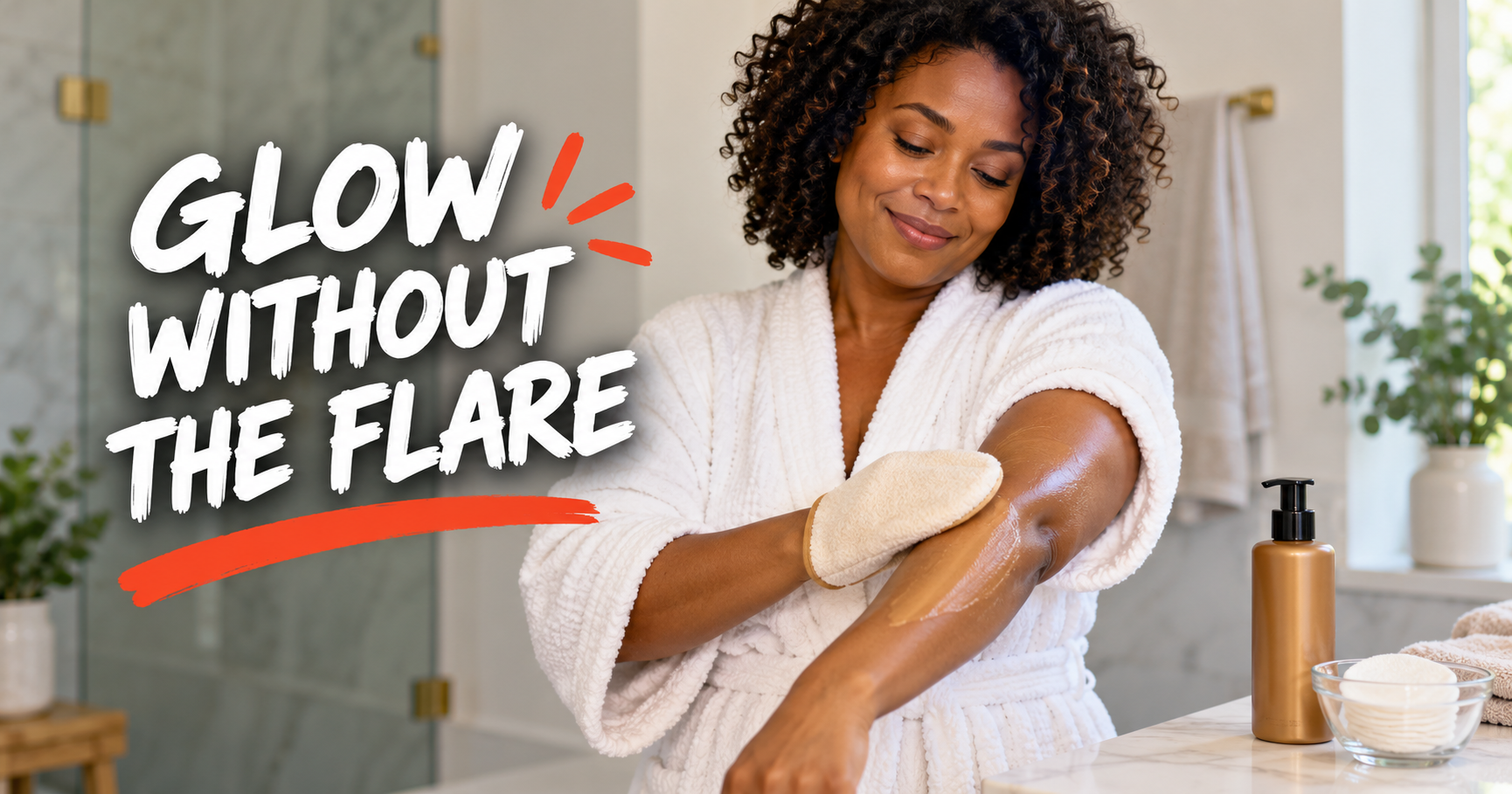
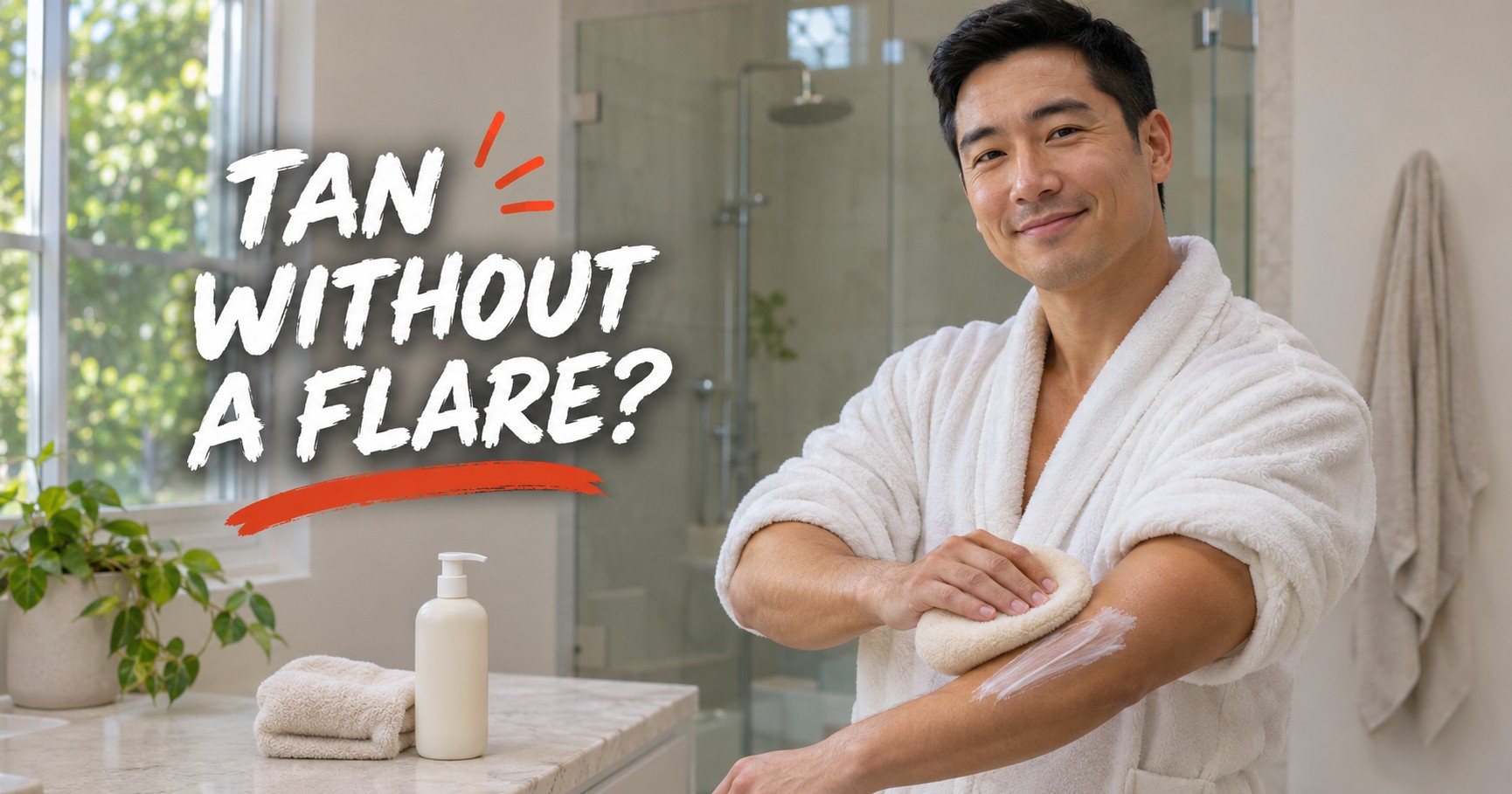
Self-tanner and eczema don’t have to be enemies, even if you wrote off a faux glow years ago. The tanning ingredient itself is rarely the problem. The trouble usually comes from the fragrance, alcohol, and preservatives packed into many tanners. Here’s how to pick and use one without setting off a flare.
Why Self-Tanner Can Trigger Eczema
Eczema skin has a weakened barrier, so irritants get in more easily. Most self-tanners contain DHA (dihydroxyacetone), a sugar that reacts with the dead cells on the top layer of your skin to create color. DHA is considered safe for external use and works without UV light.
The common culprits are the other ingredients:
- Fragrance. One of the most common causes of contact allergy and eczema flares
- Drying alcohols. Can strip the skin barrier before the tan even develops
- Harsh preservatives. Some are known to cause reactions in sensitive skin
- Added bronzers, dyes, and shimmer
For help reading ingredient lists, see our guide to reading a skincare label for sensitive skin.
When to Skip It
Don’t use self-tanner:
- During a flare
- On cracked, weepy, or broken skin
- On skin that was recently inflamed and is still healing
Wait until your skin has calmed down. Some experts suggest giving it a couple of weeks after a flare clears.
How to Choose a Gentler Self-Tanner for Eczema
| Look For | Avoid |
|---|---|
| Fragrance-free (not just “unscented”) | Perfume or botanical scents |
| Alcohol-free or alcohol-minimal | Denatured alcohol or ethanol high on the list |
| Hydrating bases with glycerin, aloe, ceramides, or oatmeal | Heavy “bronzer” and shimmer |
| Gradual or lower-strength formulas | Very dark, high-strength tanners |
| Lotion or cream formats | Spray or mousse formulas with alcohol |
How to Use Self-Tanner Safely With Eczema
- Patch test first. Put a small amount on your inner arm or behind your ear for 24 to 48 hours.
- Moisturize beforehand. Use a gentle, fragrance-free cream and let it absorb fully.
- Skip harsh scrubs. Rough exfoliating can irritate eczema-prone skin.
- Apply with a mitt for smoother, more even color with less rubbing.
- Go lightly over very dry areas, which can grab extra color.
- Keep it off irritated patches.
- Let it dry fully before dressing, and wear loose cotton.
- Moisturize again afterward, once you’ve rinsed off or the directed time has passed.
The Sweat Problem
Sweat and tanner don’t mix, and sweat is a common eczema trigger. A wet or sweaty tan can streak or fade, and sweat can irritate the skin. Plan your tanning for a cool, calm time, and see our guide to sweat and eczema for ways to manage it.
A Reminder About Sun and Tanning Beds
A self-tan doesn’t protect you from the sun. Keep using sunscreen. And tanning beds aren’t a safe shortcut. If you also have psoriasis, our guide to self-tanner and psoriasis covers some extra points.
Quick Do’s and Don’ts
| Do | Don’t |
|---|---|
| Patch test | Tan during a flare |
| Choose fragrance-free, alcohol-free formulas | Use “unscented” products with hidden fragrance |
| Moisturize before and after | Scrub your skin raw first |
| Use a mitt | Rub the product in hard |
| Start with a lighter shade | Go for the darkest shade first |
| Keep using sunscreen | Treat a tan as sun protection |
When to See a Doctor
- You get redness, itching, or a rash after using a tanner
- Eczema flares in areas where you applied it
- You’ve had reactions to products before and want to find the cause
- You’re not sure what ingredient is bothering your skin. A dermatologist can do patch testing
A patch test, a calm patch of skin, and a clean formula make a big difference. If your skin says no, listen to it.
For more patient information, visit the National Eczema Association.
Mike Marenick is the creator of HealFast Skincare and DermaSolve, and holds the patent for his invention, Ovasome Technology, used in skincare formulations. He began developing skincare products after watching his mother manage psoriasis for decades, and has spent over twenty years formulating treatments for chronic skin conditions. His work has been featured on Home Shopping Network, in two national infomercials, and in more than 300 publications including Vogue, Newsweek, and Allure. He is not a medical doctor — always consult a dermatologist for diagnosis and treatment of skin conditions.