
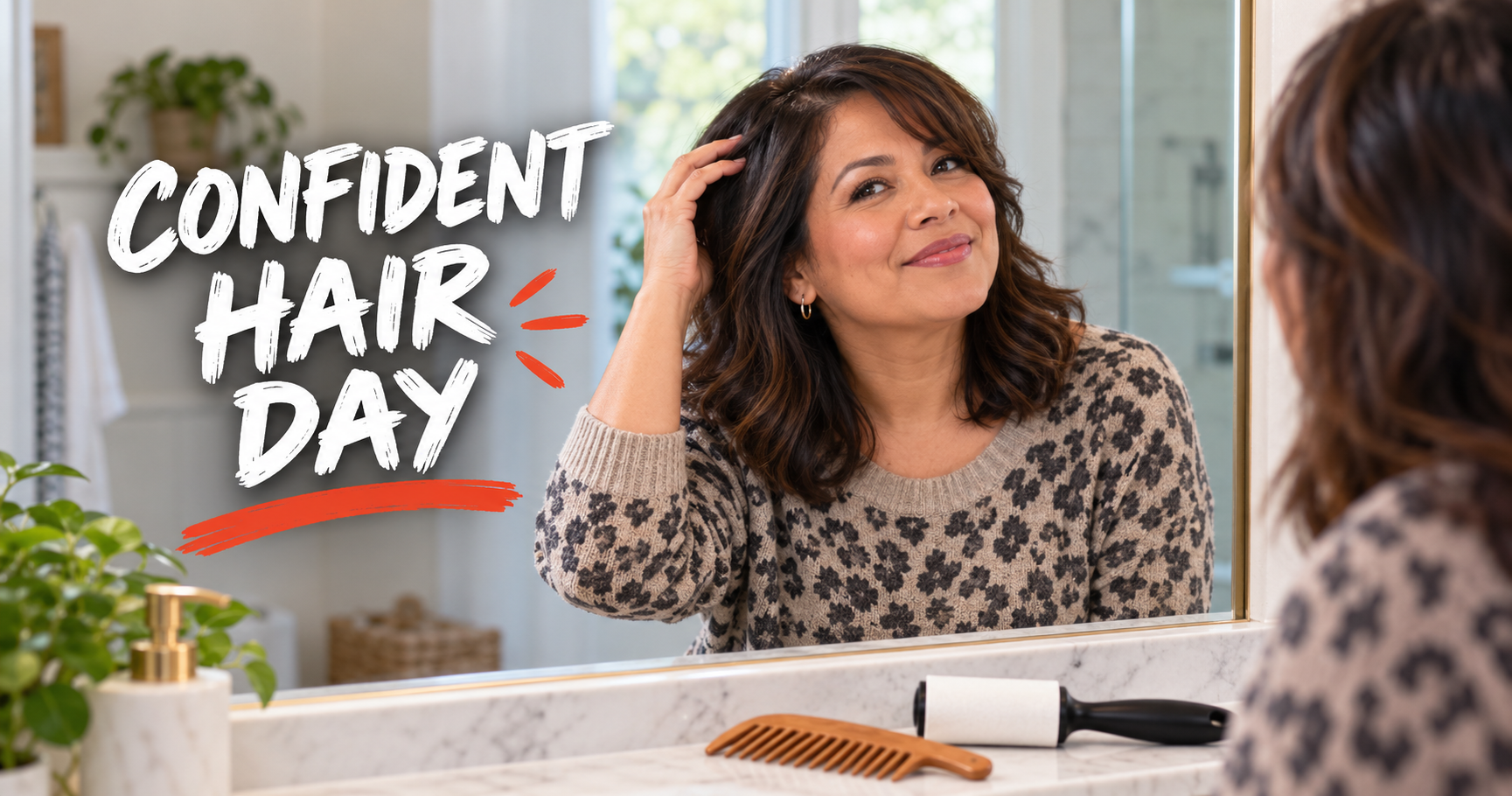
If you’re hiding scalp psoriasis flakes, you know the daily routine. You check your shoulders, think twice about dark shirts, and avoid close-up photos. It’s frustrating, and it’s common. The good news is that a few styling tricks and a gentle routine can make flakes less noticeable, without making your scalp worse. Here’s what helps.
Start With the Flakes Themselves
Hiding works best when there’s less to hide. Thick scale flakes off more easily, so loosening it gently and washing it away can cut down on what shows up on your shoulders. If you haven’t yet, see our guide to removing scalp psoriasis scales safely.
The basic idea is to soften scale with oil, wash with a gentle or medicated shampoo, and never pick or scrape.
Quick Fixes for the Day
- Wear clothes that don’t show flakes. Mid-tones and prints hide them better than solid black or navy.
- Keep a lint roller handy, in your bag or desk drawer.
- Brush your shoulders gently, not your scalp.
- Wash on schedule. Letting scale build up usually means more flaking later.
Hairstyles That Help
Some styles can cover plaques at the hairline, ears, and neck without pulling on your scalp:
| Trouble Spot | Style That Helps |
|---|---|
| Forehead hairline | Side-swept or full bangs |
| Around the ears | Hair worn loose over the ears, or longer sideburns |
| Back of the neck | A low, loose ponytail or hair worn down |
| Crown or part line | Shifting your part, or using a loose zigzag part |
| All over | Layered or textured cuts, which hide flakes better than flat, smooth styles |
Styles to Avoid
- Tight ponytails, buns, and braids. Constant tension can irritate the scalp, set off a flare, and over time cause hair loss.
- Hot tools touching your scalp. Curling irons, flat irons, and hot rollers can burn or irritate skin.
- Aggressive brushing. Scratching or scraping a plaque can trigger a flare, a reaction called the Koebner phenomenon.
- Shaving your head with a razor. Tiny cuts can set off new plaques. If you want short hair, ask a barber to use electric clippers with a guard.
- Tight hats, helmets, and headbands. Friction and pressure can irritate plaques.
What About Extensions and Wigs?
Experts disagree here, so be careful.
- Glued, sewn, or tight-braided extensions can pull on the scalp and trap moisture and product against plaques.
- Some people find lightweight wigs or clip-in pieces are gentler than tight styles, as long as they don’t rub or press on sore skin.
- Don’t attach anything over plaques, cracked skin, or bleeding spots.
- Keep scalp care going underneath. Skipping washes can make flaking worse.
Ask your dermatologist or stylist before trying anything that attaches near your scalp.
Hair Color and Chemicals
Coloring, perming, and relaxing can irritate a psoriasis scalp. It’s best to avoid them during a flare. If you color your hair, see our guide to coal tar shampoo on color-treated hair, and ask your dermatologist about your options.
A Gentle Routine That Supports Your Style
- Loosen scale with an oil or scale-softening product before washing.
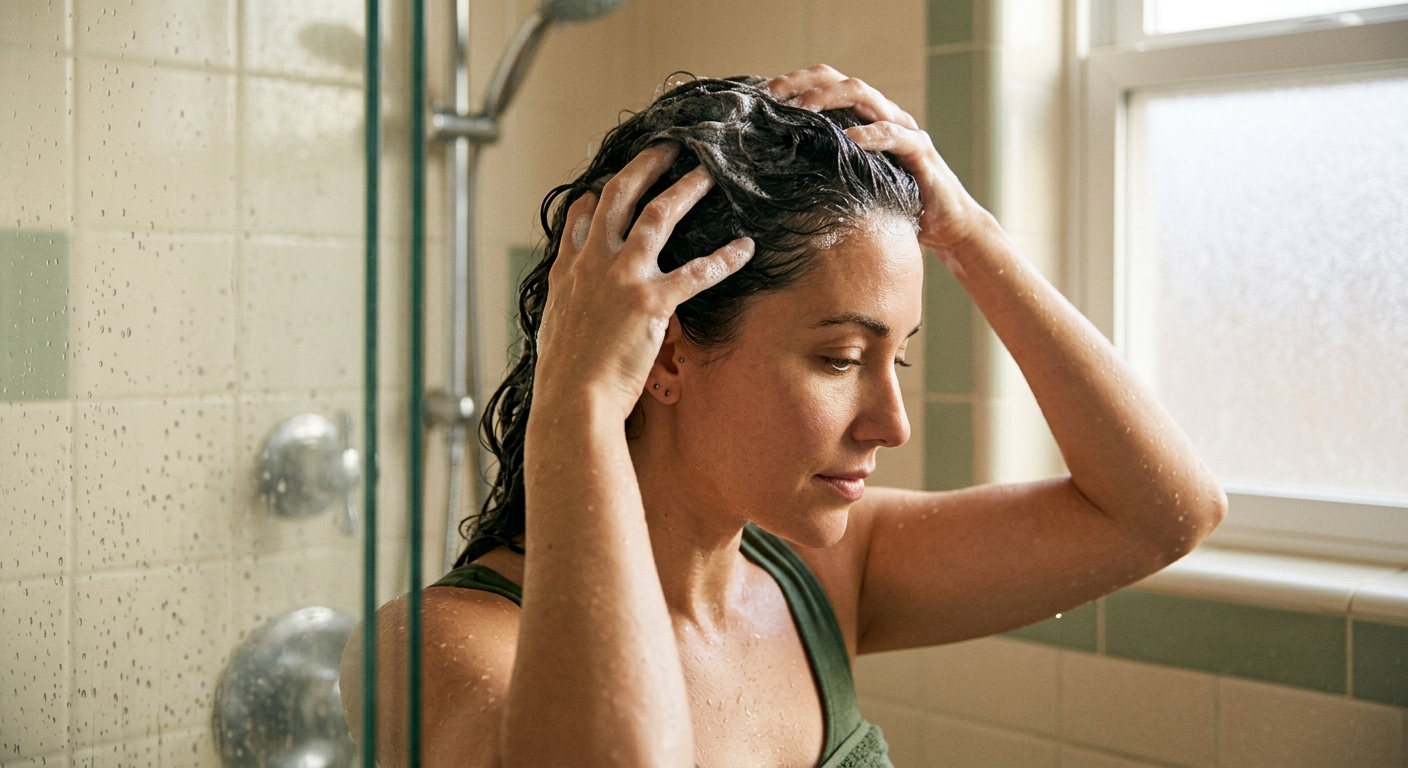
- Wash with lukewarm water and a medicated or gentle shampoo.
- Rinse well, so no residue is left behind.
- Pat dry instead of rubbing, and use low heat or air dry.
- Use styling products sparingly. Choose fragrance-free formulas. Heavy sprays and powders can build up and irritate.
If you’d like products designed to work together, the Dermasolve Psoriasis Scalp Kit includes a shampoo, a scalp oil, and a cream for the hairline and behind the ears. The oil is meant to help loosen scaling, and the shampoo contains salicylic acid to help lift it away. As with any scalp product, skip it on cracked or bleeding skin.
Quick Do’s and Don’ts
| Do | Don’t |
|---|---|
| Loosen scale before you wash | Pick or scrape flakes |
| Choose loose, soft styles | Wear tight braids, buns, or ponytails |
| Keep hot tools away from your scalp | Let heat touch plaques |
| Use fragrance-free products | Load up on heavy sprays and powders |
| Ask before getting extensions or color | Attach anything over plaques |
| Keep a lint roller handy | Skip washes to avoid flaking |
When to See a Doctor
- Scale is thick, or covers much of your scalp
- You’re losing hair
- The scalp is bleeding, oozing, or very painful
- Home care isn’t helping after a few weeks
- Flaking is affecting your confidence or daily life
Scalp psoriasis is common, and flakes don’t say anything about you. With a gentle routine and a few smart style choices, many people feel a lot more comfortable.
For more patient information, visit the National Psoriasis Foundation.
Mike Marenick is the creator of HealFast Skincare and DermaSolve, and holds the patent for his invention, Ovasome Technology, used in skincare formulations. He began developing skincare products after watching his mother manage psoriasis for decades, and has spent over twenty years formulating treatments for chronic skin conditions. His work has been featured on Home Shopping Network, in two national infomercials, and in more than 300 publications including Vogue, Newsweek, and Allure. He is not a medical doctor — always consult a dermatologist for diagnosis and treatment of skin conditions.
This post contains affiliate links. As an Amazon Associate, I earn from qualifying purchases.


Leave a Reply