
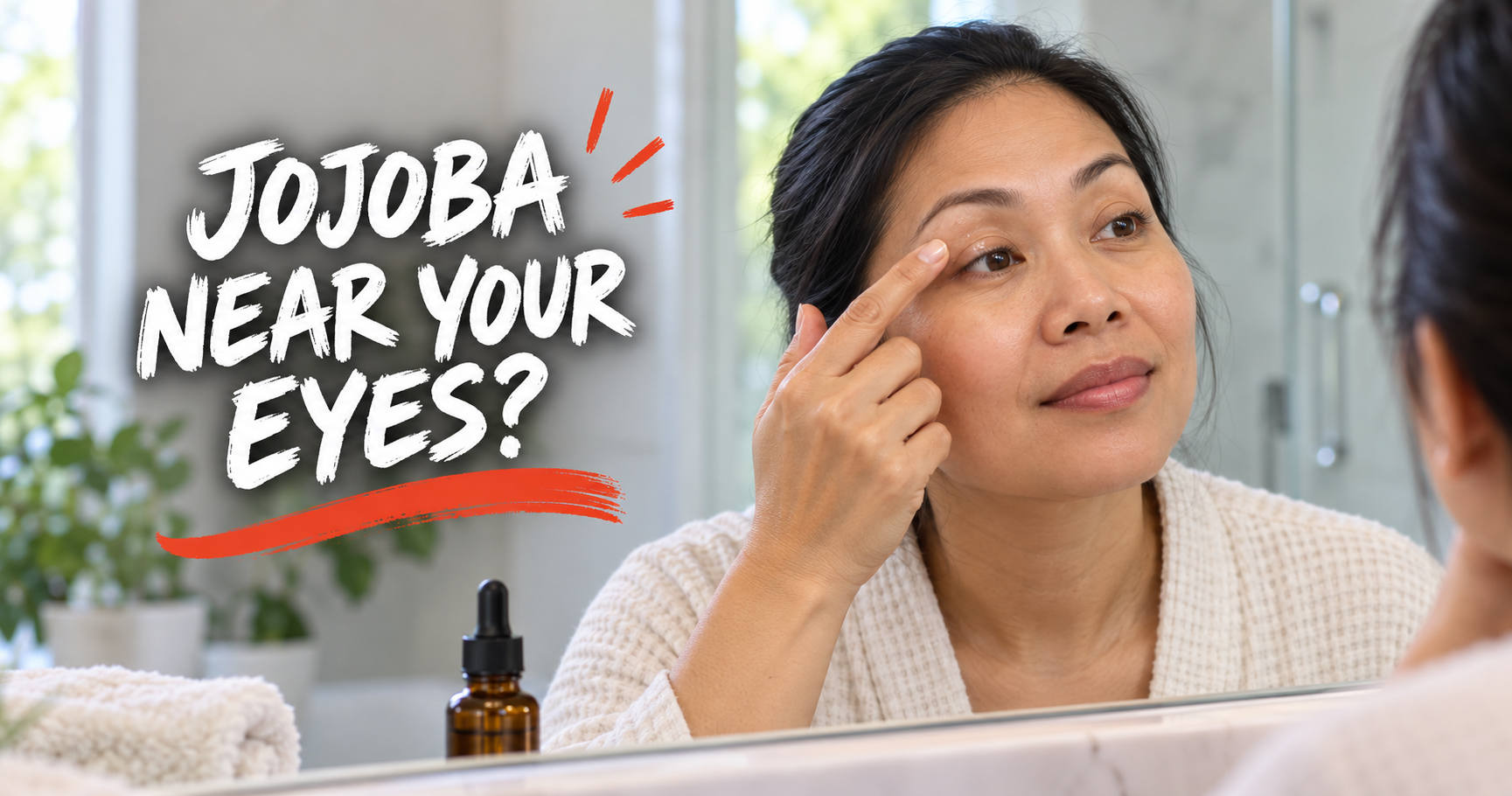
If your eyelids are red, dry, and itchy, you may be tempted to reach for a natural oil. Jojoba oil for eyelid eczema is a popular idea, since it’s gentle and widely sold. But the skin around your eyes is the thinnest on your body, and it’s right next to a very sensitive organ. Here’s what’s known, what isn’t, and how to be careful.
What Is Jojoba Oil?
Jojoba oil isn’t technically an oil. It’s a liquid wax that comes from the seeds of the jojoba plant. It’s similar in feel to the natural oils your skin makes, spreads thin, and isn’t as heavy as many plant oils. Many skin products contain it, and it’s allowed in cosmetics used around the eyes, though not in the eyes.
Does It Help Eyelid Eczema?
The honest answer is that we don’t know for sure.
- Research is limited. No strong studies show jojoba oil treats eyelid eczema.
- It may help as a moisturizer. Dry skin around the eyes can feel better with a gentle emollient, and jojoba is generally well tolerated.
- It won’t fix the cause. Eyelid eczema often comes from an allergy or irritant. Moisturizing eases symptoms, but it doesn’t find the trigger.
Why Eyelid Eczema Is Different
- The skin is very thin, so it absorbs more of whatever you put on it.
- Products can reach the eyes, by migrating, blinking, or rubbing.
- Triggers are often hidden. Makeup, makeup remover, nail polish, hair dye, face washes, and fragrances can all cause eyelid reactions, even if you never put them on your lids directly. Your hands can carry them there.
Possible Downsides of Jojoba Oil
- Allergy. It’s uncommon, but possible.
- Purity varies. Some products have added fragrance or other ingredients that irritate.
- Blurry vision. If oil gets into your eyes, it can cloud your sight for a while.
- Clogged glands. If you have a history of styes, blepharitis, or dry eye, oil near the lash line may not be a good idea. Ask an eye doctor first.
If You Decide to Try It
- Check with your doctor, especially if you have eye conditions or your eyelids are very inflamed.
- Choose a pure product. Look for 100% jojoba with no fragrance, essential oils, or additives.
- Patch test first. Put a small amount on your inner arm for 24 to 48 hours.
- Use a tiny amount. A drop on your fingertip is plenty.
- Stay away from the lash line and the eye itself. Apply to the eyelid skin only, and dab gently.
- Apply to slightly damp skin after washing your face.
- Stop right away if you notice stinging, redness, swelling, or blurry vision.
Simpler Options
Safe, simple steps often work best:
- Cool compresses for itch and swelling
- Plain, fragrance-free moisturizer or ointment made for sensitive skin
- A shorter routine. Cut back on products near the eyes
- Skipping eye makeup until the skin calms down
For more ideas, see our guide to the best non-greasy moisturizer for eyelid eczema.
Quick Do’s and Don’ts
| Do | Don’t |
|---|---|
| Patch test first | Use blends with fragrance or essential oils |
| Use a tiny amount on the lid skin | Apply to the lash line or inside the eye |
| Keep the routine simple | Layer many products around the eyes |
| Look for hidden triggers | Assume oil will cure the problem |
| Stop if anything stings or blurs vision | Keep using it if your eyelids get worse |
When to See a Doctor
- Eyelids stay red, swollen, or itchy after two weeks of simple care
- You have pain, vision changes, or discharge
- Eyelid eczema keeps coming back
- You’ve had eye problems, like styes, dry eye, or blepharitis
- You suspect an allergy. A doctor can do patch testing to help find the trigger
Eyelid eczema can be stubborn, but finding the trigger is often the key. Be gentle and keep things simple, and check in with a doctor if your eyelids aren’t improving.
For more patient information, visit the National Eczema Association.
Mike Marenick is the creator of HealFast Skincare and DermaSolve, and holds the patent for his invention, Ovasome Technology, used in skincare formulations. He began developing skincare products after watching his mother manage psoriasis for decades, and has spent over twenty years formulating treatments for chronic skin conditions. His work has been featured on Home Shopping Network, in two national infomercials, and in more than 300 publications including Vogue, Newsweek, and Allure. He is not a medical doctor — always consult a dermatologist for diagnosis and treatment of skin conditions.



Leave a Reply