

Red light therapy for psoriasis is all over social media and online ads. Panels, masks, and wands promise to calm plaques without drugs or UV rays. It sounds great, but the real answer is more complicated. Here’s what’s known, what isn’t, and how to avoid wasting money or skipping treatment that works.
What Is Red Light Therapy?
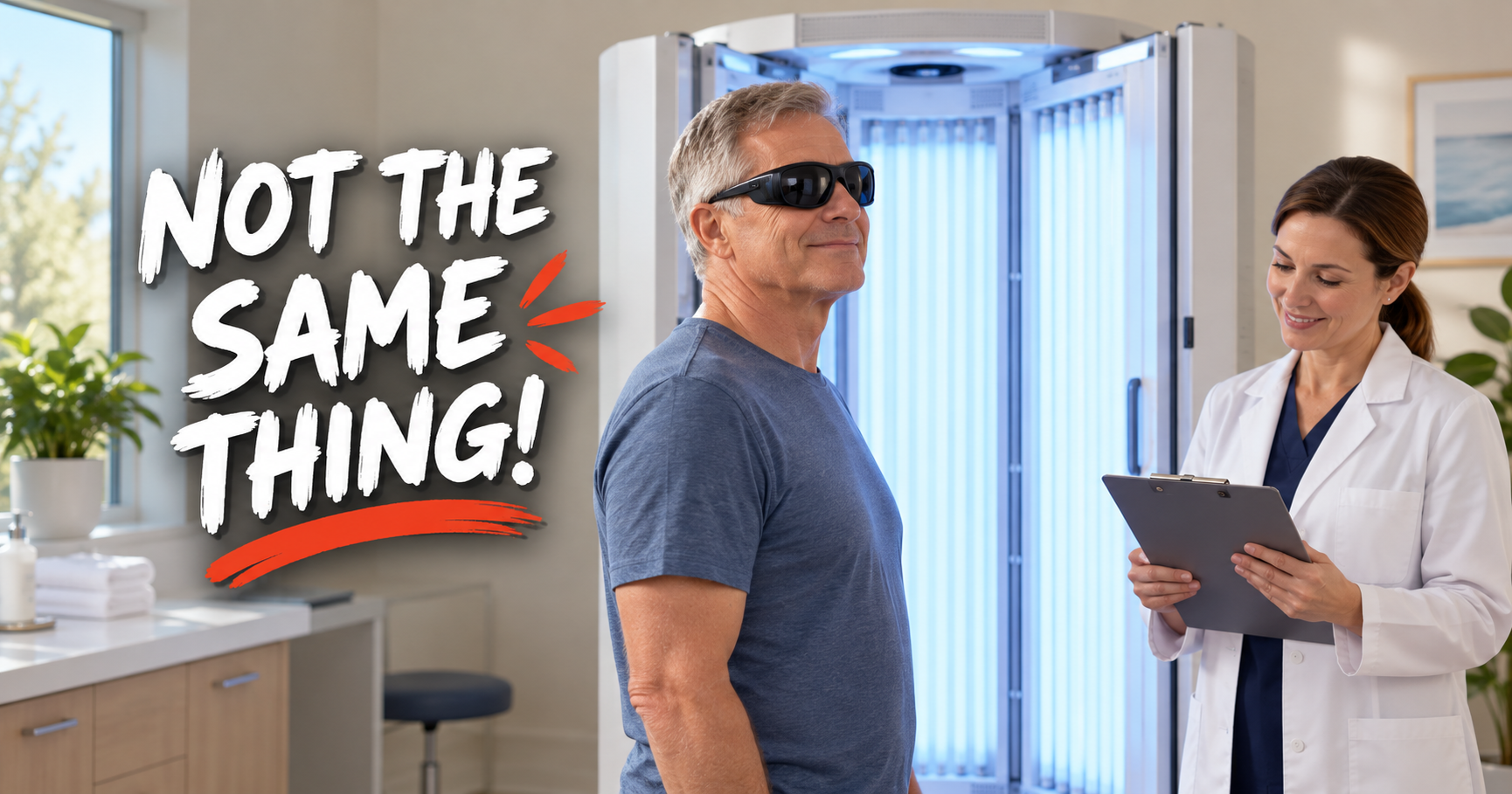
Red light therapy uses low levels of red or near-infrared light. It’s used in cosmetic products for things like wrinkles, acne, and skin tone. It’s different from UV light, which is the kind doctors use to treat psoriasis.
Red light isn’t tanning, and it doesn’t burn. That’s why it feels safer. But safer doesn’t automatically mean it works.
What Does the Evidence Say?
Here’s the honest picture:
- Research on red light for psoriasis is early. A few small studies suggested some benefit. Their size is too small to draw firm conclusions.
- Blue light has been studied more. Some small studies of blue light, including a wearable device, found some people’s patches improved. Results varied, and some people saw no change.
- Neither is a proven standard treatment. There’s no strong evidence yet that red light panels reliably clear psoriasis.
- FDA clearance doesn’t mean it works for psoriasis. The FDA clears many light devices for safety. That doesn’t mean it has checked that they treat psoriasis. Most red light devices are cleared for cosmetic uses, not for psoriasis.
Some websites claim red light clears psoriasis by large percentages. Be careful. Many of those come from companies that sell panels, and they often rely on very small studies.
How It Compares to Other Light Treatments
| Light Type | Evidence for Psoriasis | Notes |
|---|---|---|
| Narrowband UVB (medical) | Strong | The standard light treatment, done with a doctor’s guidance |
| Blue light | Small studies | Mixed results. Some people saw skin darkening around treated patches |
| Red or near-infrared light | Early and limited | Not an established treatment |
| Tanning beds | Not recommended | Mostly UVA and higher skin cancer risk. See our guide to tanning beds for psoriasis |
Are There Risks?
Red light is generally considered low risk, but problems can happen:
- Skin irritation or redness
- Darkening of the skin (hyperpigmentation)
- Eye strain or damage if the light is too bright and eyes aren’t protected
- Burns from poorly made devices
- Delaying proven treatment while you wait for results
Devices vary a lot in quality, strength, and safety. Cheap panels may not deliver the light they advertise.
If You’re Thinking About Trying It
- Talk to your dermatologist first. Ask whether it makes sense for your type and amount of psoriasis.
- Don’t stop your current treatment. Treat red light as an extra, not a replacement.
- Protect your eyes. Follow the device instructions, and don’t stare at the light.
- Start slowly, with short sessions, and watch your skin.
- Track results. Take photos every week or two. If nothing changes after a couple of months, it probably isn’t helping you.
- Be wary of big promises and “cure” language.
- Consider cost. Good devices can be expensive. Compare that to treatments with stronger evidence.
What Has the Strongest Evidence?
For light-based treatment, the standard is narrowband UVB phototherapy, given in a clinic or sometimes with a prescribed home unit. Topical medicines and gentle skin care are also the foundation. A good moisturizer routine, trigger avoidance, and a doctor’s guidance still come first.
When to See a Doctor
- Your psoriasis is spreading or getting worse
- Creams and home care aren’t working
- You’re considering stopping a prescribed treatment
- Skin gets red, blistered, or very sore after light treatment
- You want to know whether a light device is safe with your medications
It’s natural to want something new and drug-free. Red light therapy may turn out to help some people, but for now it’s best seen as an experiment, not a proven answer. Bring your doctor into the conversation and keep your tried-and-true treatments in place.
For more patient information, visit the National Psoriasis Foundation.
Mike Marenick is the creator of HealFast Skincare and DermaSolve, and holds the patent for his invention, Ovasome Technology, used in skincare formulations. He began developing skincare products after watching his mother manage psoriasis for decades, and has spent over twenty years formulating treatments for chronic skin conditions. His work has been featured on Home Shopping Network, in two national infomercials, and in more than 300 publications including Vogue, Newsweek, and Allure. He is not a medical doctor — always consult a dermatologist for diagnosis and treatment of skin conditions.



Leave a Reply